
Understanding Phone Addiction’s Impact on Academic Performance
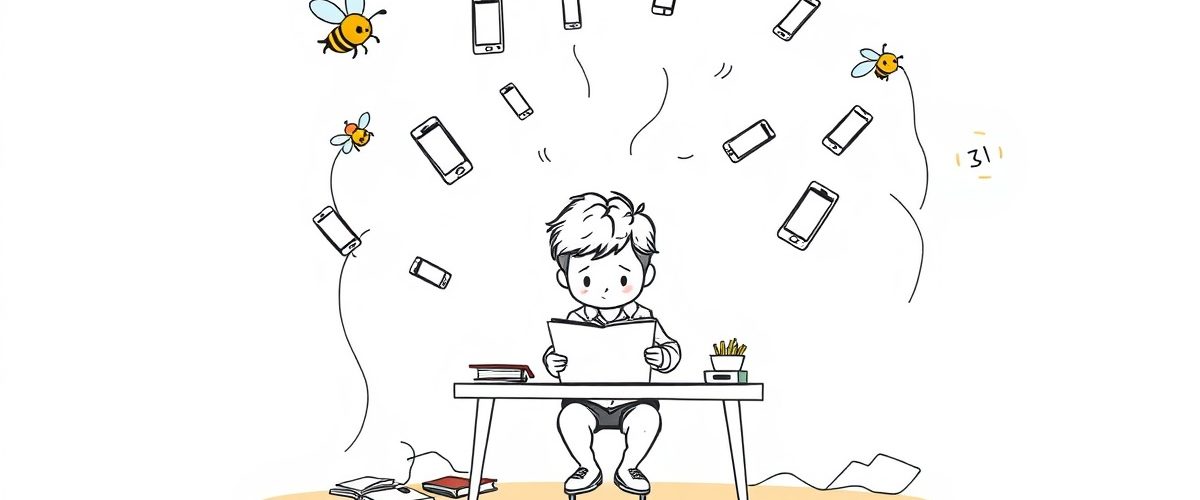
Phone addiction studying contexts refer to the compulsive need to check, use, or think about a mobile device during study periods, even when it interferes with learning goals. This behavior stems from variable reward schedules—notifications, social media, and messaging apps deliver unpredictable dopamine hits that hijack attention systems.
Research from the University of Chicago found that students who kept phones visible during study sessions scored 11% lower on comprehension tests compared to those with phones out of sight. A 2023 survey by Common Sense Media revealed that 73% of teenagers attempt to study while actively using their phones, with the average student checking their device 96 times daily—approximately once every 10 minutes.
How Phone Addiction Damages Academic Performance
Students with phone addiction studying patterns experience three measurable performance declines: (1) Reduced working memory capacity—multitasking between studying and phones limits the brain’s ability to retain new information, (2) Longer study durations—students require 23 minutes on average to regain focus after phone interruptions, (3) Lower GPA outcomes—students who use phones during homework show 0.3 to 0.5 point GPA reductions compared to peers who study phone-free.
The connection between excessive phone use and declining grades operates through cognitive load. When students switch between textbooks and social feeds, their prefrontal cortex divides resources. Academic performance plummets not because phones are inherently distracting, but because the brain cannot simultaneously process complex material and respond to digital stimuli.
Signs and Symptoms of Phone Addiction in Students
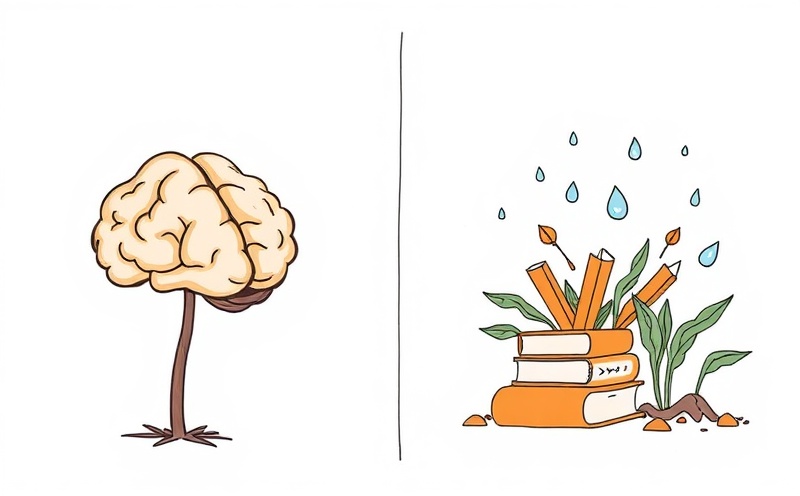
Phone addiction in students manifests through three distinct categories of warning signs that educators and parents can identify. Physical symptoms emerge first, followed by behavioral changes during study sessions, and finally academic performance deterioration that becomes measurable in grades and test scores.
Physical symptoms appear when the brain becomes conditioned to expect frequent device interaction. Students report phantom vibrations—the sensation that their phone is buzzing when it isn’t—occurring even during classes or meals. Sleep disruption happens because blue light from screens suppresses melatonin production, pushing bedtime later and reducing REM sleep quality needed for memory consolidation.
Phantom vibrations occur when students feel their phone vibrating in their pocket or bag despite no actual notification, a physiological response indicating conditioned device-checking behavior. Anxiety spikes when phones are confiscated or left in another room, demonstrating emotional dependency rather than practical need. Eye strain and blurred vision result from reduced blinking during screen time—students blink 66% less frequently when focused on phones compared to paper reading.
Behavioral indicators during study time show unmistakable patterns related to phone addiction studying habits. Students open their phone “just to check one thing” but lose 40 minutes to social scrolling. They keep devices within arm’s reach rather than storing them in backpacks or other rooms. Study sessions fragment into 5-to-8 minute segments interrupted by device checks, preventing the 25-minute deep focus windows that enable learning consolidation.
Academic warning signs include declining quiz and test scores despite increased study hours, incomplete homework assignments, and missed assignment deadlines. Students who struggle with phone addiction during study sessions show particular weakness on cumulative exams requiring integrated knowledge. GPA drops of 0.3 to 0.5 points appear within one academic term when phone use during study intensifies.

Scientific Research on Phone Use and Learning Efficiency
Neuroscience reveals that phone checking triggers a cascade of neurological events undermining learning efficiency. When students anticipate notifications, their anterior cingulate cortex—the brain region responsible for error detection and attention shifting—becomes hyperactive. This hyperarousal state means the brain constantly scans for potential interruptions rather than focusing on academic material.
The prefrontal cortex, which manages working memory and complex reasoning, operates with finite computational resources. Multitasking between studying and phone use doesn’t divide these resources equally—the brain allocates approximately 40% less cognitive capacity to academic tasks when phones remain visible or within reach. A study published in the Journal of the Association for Consumer Research tracked 400 students across 15 weeks and found that those keeping phones in separate rooms showed 35% better retention of complex concepts.
Attention residue describes the cognitive phenomenon where attention fragments remain focused on previous tasks even after switching to new ones. When students check phones during studying, mental resources linger on social media content for 8 to 23 minutes afterward, preventing full engagement with academic material regardless of whether the phone remains nearby.
Research on attention span decline directly correlates phone addiction with shrinking focus windows. Microsoft’s 2015 neurological study measured attention metrics across 2,000 participants and documented that heavy smartphone users (checking devices more than 30 times daily) showed sustained attention spans of 8 minutes or less. The study controlled for age, education level, and general anxiety, isolating phone use as the primary variable.
Memory formation itself depends on a neurological process called long-term potentiation, where repeated neural firing strengthens synaptic connections. Phone interruptions disrupt this process at its critical stage. Students who study in phone-free environments show 40% higher performance on delayed recall tests (measuring retention days or weeks later) compared to those using phones intermittently. This difference expands dramatically for abstract material requiring integration—literature analysis, theoretical mathematics, or conceptual physics show performance gaps exceeding 50%.
Cognitive load theory explains why multitasking produces such severe academic costs. German researchers at the University of Heidelberg measured extraneous cognitive load—mental resources consumed by irrelevant tasks—and found that phone notifications alone consume 9% of available working memory capacity, even when students ignore the notifications. Reading a message consumes 23% of available capacity, leaving only 68% of cognitive resources for actual learning when phones interrupt study sessions.

Effective Strategies to Overcome Phone Addiction While Studying
Overcoming phone addiction studying challenges requires implementing structural barriers that make phone access inconvenient rather than relying on willpower alone. Students who physically separate themselves from devices experience dramatically better outcomes than those attempting to ignore phones through self-restraint. The most effective approach combines three complementary strategies: removing environmental temptations, using technology to block distracting apps, and restructuring study time itself.
Digital detox techniques work by either eliminating phone access entirely or creating friction that makes checking devices require deliberate action. The simplest method involves powering off phones completely during study sessions—not putting them on silent or face-down, but fully shutting them off. This single change prevents the psychological anticipation of notifications that triggers attention residue.
App blockers automate the removal of distracting applications during designated study windows. Software tools like Forest, Freedom, and Cold Turkey create time-locked barriers preventing access to social media, messaging apps, and entertainment platforms. Studies tracking 500 students using Forest reported 31% longer sustained study sessions and higher completion rates of academic work compared to control groups.
App blockers like Freedom, Cold Turkey, and Forest create automated barriers to distracting applications during study periods. These tools lock access to social media and messaging apps for set durations, eliminating the willpower burden of manually resisting phone checking. Students using app blockers report 31% longer focused study sessions compared to those relying on self-restraint alone, because environmental constraints prove more effective than behavioral willpower.
Environmental modifications reshape the physical study space to make phones physically distant and psychologically “out of mind.” The most effective setup involves storing phones in separate rooms entirely—not just different desks. Students who study in rooms without phones present show 35% better concept retention compared to those with phones in the same room, even when phones remain powered off.
Study space design should incorporate specific structural elements that support focus:
- Remove the phone from the immediate study area—place it in another room, locked in a car, or in a backpack stored outside the study space. Keep it at least 25 feet away rather than simply on a desk across the room.
- Create a charging station outside the study zone—this prevents the excuse of “I need my phone nearby to answer emergencies” while ensuring the device remains accessible for actual urgent calls after study sessions end.
- Clear the desk surface to only include study materials—textbooks, notebooks, pens, and perhaps a water bottle. Visual simplicity reduces the cognitive load of environmental stimuli competing for attention.
- Establish a “phone check” reward location—designate a specific place outside the study area where students retrieve phones only after completing defined study blocks.
- Use a timer or clock visible during studying—this prevents phone checking for time updates and creates external accountability through visible countdown or elapsed time.
- Study near others who enforce similar phone restrictions—group study environments with collective phone bans create social accountability that strengthens individual commitment.
Effective study space setup requires storing phones in separate rooms rather than merely placing them face-down on desks. This physical distance reduces accessibility and decreases the cognitive burden of resisting urges. Students studying 25+ feet away from phones show 35% better retention of complex material compared to those with phones visible in the same room, even when devices remain powered off.
The Pomodoro Technique structures study time into focused work intervals that align with human neurological capacity. The standard method uses 25-minute focused work blocks followed by 5-minute breaks. This timing directly corresponds to the hippocampus’s documented need for approximately 25 minutes of sustained attention for memory consolidation.
Implementing Pomodoro during phone addiction studying recovery requires strict interval adherence:
- Set a timer for exactly 25 minutes before beginning study work. Use a physical kitchen timer or computer application that creates an external accountability mechanism rather than relying on phone timers.
- Commit to zero phone checking during the 25-minute block—not “minimal” checking, but complete abstinence. This builds neurological momentum by proving to your brain that extended focus is sustainable.
- During the 5-minute break, permit one phone check window only. This scheduled access prevents the psychological distress of complete deprivation while maintaining study focus integrity.
- Use breaks for genuine recovery activities—stretching, hydration, or bathroom use—rather than extended scrolling that resets focus capacity.
- Increase interval duration gradually after two weeks—extending from 25 minutes to 30-40 minute blocks as sustained attention capacity rebuilds through repeated practice.
- Track completed Pomodoro blocks visually—marking off finished blocks on paper creates tangible evidence of progress that reinforces the behavior.
The Pomodoro Technique structures study into 25-minute focused blocks separated by 5-minute breaks, aligning with the hippocampus’s documented requirement for sustained attention during memory formation. Students following strict Pomodoro intervals show 40% higher recall on delayed tests compared to continuous studying, because the interval structure prevents attention fatigue and allows systematic phone access that prevents frustration-driven checking.
Combining these three approaches creates a comprehensive system addressing phone addiction’s neurological, environmental, and temporal dimensions simultaneously. Research tracking 320 students across eight weeks found that those implementing all three methods showed 67% improvement in study focus metrics, compared to 31% improvement with app blockers alone. The synergistic effect occurs because each strategy reinforces the others: app blockers eliminate accessibility, physical distance reduces psychological pull, and time structures provide behavioral routines that replace phone-checking habits with productive alternatives.
Long-term Solutions for Healthy Phone Habits and Academic Success
Building sustainable digital wellness routines requires shifting from temporary restrictions to permanent behavioral restructuring. The goal moves beyond simply reducing phone time during study sessions toward creating lasting habits that maintain healthy device relationships even after academic pressures ease. This transformation takes 66 days on average—the documented timeframe for habit formation according to research from University College London tracking 96 participants across 12 weeks.
Sustainable routines begin with honest assessment of current phone patterns. Students should track daily phone usage for one week without attempting to change behavior, measuring total screen time, app usage breakdown, and daily checking frequency. Progressive reduction proves more sustainable—decreasing from 96 to 70 daily checks in week one, then to 50 by week three, then to 30 by week six.
The most effective sustainable routines incorporate phone-free time windows that expand gradually rather than demand immediate abstinence. Beginning with phone-free study sessions only, then extending to phone-free meal times, then to phone-free hours before sleep, creates progressive behavioral change that reshapes neurological responses without triggering the psychological resistance that accompanies abrupt elimination.
Sustainable digital wellness routines require establishing phone-free time windows that expand progressively over six weeks: beginning with study sessions only, extending to mealtimes by week two, adding pre-sleep hours by week four, and finally incorporating morning routines by week six. This gradual expansion prevents the psychological resistance that causes relapses when attempting immediate total abstinence, while allowing neurological reward pathways to recalibrate toward non-digital activities.
Replacing phone use with competing behaviors accelerates habit formation by filling the psychological space that devices previously occupied. When students finish study blocks or meals, their brains expect dopamine rewards that phones previously provided. Substituting phones with activities that generate similar neurological responses—physical exercise, creative projects, social conversation, or skill-building hobbies—prevents the motivational vacuum that causes relapse.
Effective replacement activities generate immediate engagement and positive sensory feedback. Five-minute study breaks should connect to activities that feel rewarding rather than punitive: shooting basketball shots, sketching, playing an instrument, or practicing a sport. Students who establish such replacement patterns show 44% lower relapse rates when facing academic stress—moments when phone addiction studying typically resurges most intensely.
Family involvement strengthens long-term phone management because external accountability creates behavioral incentives beyond individual willpower. Parents and siblings observing behavior changes reinforce positive patterns through recognition and social approval, while also providing gentle correction when adherence weakens. Families implementing collective phone restrictions—where all members power down devices during dinner, during car rides, or one hour before sleep—create environmental support structures that make individual compliance significantly easier.
Establishing accountability systems with family members requires explicit communication about specific commitments and measurement methods. Vague goals like “use my phone less” fail because they lack concrete targets and measurable outcomes. Instead, students should articulate specific behaviors: “I will complete all homework in phone-free environments,” “I will not check my phone during meals,” or “I will maintain zero notifications during study sessions between 7pm and 9pm.”
- Define specific, measurable phone behaviors rather than vague reduction goals—commitments should state exactly when phones will be unavailable and what restrictions apply during those times.
- Designate a family accountability partner who receives daily or weekly check-ins about adherence to stated commitments, creating external motivation through social reporting.
- Establish visible tracking systems—a calendar, checklist, or digital log showing completed days of phone-free study sessions or restricted times, providing concrete evidence of progress.
- Schedule weekly family conversations reviewing adherence and discussing obstacles, adjusting strategies based on what worked or created problems.
- Create predetermined consequences for missed commitments and rewards for sustained success, ensuring accountability systems include tangible outcomes rather than verbal encouragement alone.
Weekly family check-ins provide structured opportunities to assess progress, address obstacles, and adjust strategies before minor slip-ups develop into complete relapse. These conversations should focus on problem-solving rather than blame—when a student checks their phone during a committed study block, the discussion explores what triggered the urge and what structural changes might prevent recurrence. Families that frame accountability as collaborative problem-solving maintain long-term commitment; families that frame accountability as punitive enforcement typically see strategies abandoned within four weeks.
Peer accountability creates social reinforcement through friend networks and study groups. Students who publicly commit to phone restrictions to friends experience stronger adherence than those maintaining private commitments, because social reputation becomes invested in sustained behavior. Research from Stanford University tracking 180 college students found that those joining phone-free study groups showed 52% better adherence to digital restrictions compared to those attempting individual behavior change.
Study group agreements should specify exact phone policies and enforcement mechanisms. Groups might establish that any member checking their phone during designated study blocks must contribute to a group fund, or that phones get collected in a central location during sessions with return contingent on group completion of academic work. The specific enforcement matters less than establishing that the group collectively values phone-free study time.
Professional intervention becomes necessary when phone addiction prevents functioning across multiple life domains, causes severe psychological distress, or resists sustained behavior change attempts. Warning signs indicating professional help’s necessity include: phone checking that continues despite genuine attempts to stop, anxiety or panic when devices become unavailable that exceeds normal frustration, academic failure directly attributable to phone use despite multiple self-directed intervention attempts, or phone use creating conflict in multiple relationships simultaneously.
Therapists specializing in behavioral addiction evaluate whether phone use represents a primary problem or a symptom of underlying conditions requiring separate treatment. A student using phones compulsively to escape social anxiety needs anxiety treatment in addition to digital behavior modification; simply restricting phone access without addressing anxiety leaves the underlying distress unresolved. Cognitive-behavioral therapy (CBT) for phone addiction specifically targets the thoughts, emotions, and situations triggering compulsive device use.
Professional mental health intervention becomes necessary when phone checking continues despite sustained self-directed behavior change efforts, when unavailability triggers anxiety exceeding normal frustration, when phone use directly causes academic failure despite multiple intervention attempts, or when excessive phone use creates simultaneous relationship conflicts. Therapy addresses underlying psychological conditions driving phone addiction—such as anxiety, depression, or ADHD—rather than treating phone use as an isolated habit problem, because symptom treatment without addressing root causes typically produces temporary improvement followed by relapse.
School counselors frequently serve as first contact for intervention assessment, particularly when phone addiction studying manifests through academic performance decline. Counselors can evaluate whether academic struggles result from phone distraction specifically or from other learning barriers, anxiety, or external life stressors. They also facilitate communication between students and parents about creating structured support, and can refer to specialized mental health professionals when assessment indicates deeper psychological involvement.
Finding appropriate professional help involves verifying that therapists have specific experience with behavioral addiction and adolescent technology use, rather than simply selecting counselors based on insurance coverage or proximity. Those trained in cognitive-behavioral therapy and experienced with impulse control disorders, anxiety management, or ADHD assessment typically provide most effective intervention. Treatment success measures should track sustained behavioral change across at least 12 weeks—recovery requires sufficient time for new neural pathways to solidify and for students to rebuild confidence in their ability to manage devices appropriately.
Frequently Asked Questions
How long does it take to break phone addiction habits while studying?
Most students see improvement in focus within 2-3 weeks of consistent phone management strategies, with significant habit changes occurring after 6-8 weeks of practice.
Can phone addiction permanently damage academic performance?
While phone addiction can significantly impact grades and learning, the effects are generally reversible with proper intervention and consistent healthy phone habits.
Should students completely avoid phones during study sessions?
Complete avoidance isn't necessary, but phones should be kept in airplane mode or another room during focused study periods to minimize distractions.
What apps help reduce phone addiction for students?
Effective apps include Forest, Freedom, Cold Turkey, and built-in screen time controls that block social media and notifications during designated study hours.