
Strategic Guessing Techniques for Multiple Choice Tests
When you walk into a multiple choice test unprepared, strategic guessing becomes your best friend. The good news? Multiple choice tests actually hand you the answer—it’s sitting right there among the options. Your job is to narrow down the possibilities using smart techniques that work even when learning how to pass a multiple choice test without knowing anything becomes essential.
The process of elimination method is your foundation. Start by crossing out answers you know are wrong. If you can eliminate even two options from a four-choice question, your odds jump from 25% to 50%. Work through each option critically. Ask yourself: “Is this definitely false?” rather than “Is this definitely true?” False answers are usually easier to spot than correct ones.
Watch for obviously wrong answers hiding in plain sight. Test makers often include options that are completely off-topic or absurdly incorrect. These exist partly to confuse anxious test-takers and partly because they need filler options. Eliminate these immediately. If an option mentions something entirely unrelated to the question, it’s trash.
Extreme language flags often mark incorrect answers. Words like “always,” “never,” “impossible,” and “absolutely” appear frequently in wrong choices. Reality is usually more nuanced. Correct answers tend to use measured language like “often,” “typically,” or “may.” This pattern holds surprisingly well across different subjects and test types.
Statistical probability works in your favor too. Test designers try to distribute correct answers evenly. If you notice you’ve selected “C” five times in a row, that’s unusual. Switch it up strategically. Additionally, longer, more detailed options tend to be correct more often than short, vague ones. Test makers include extra details to make answers seem more authoritative and correct.
None of these techniques guarantees a perfect score, but they significantly improve your odds when knowledge alone won’t carry you through. These methods prove especially valuable for students seeking how to get good grades without studying extensively.
How to Read Test Questions Like a Detective
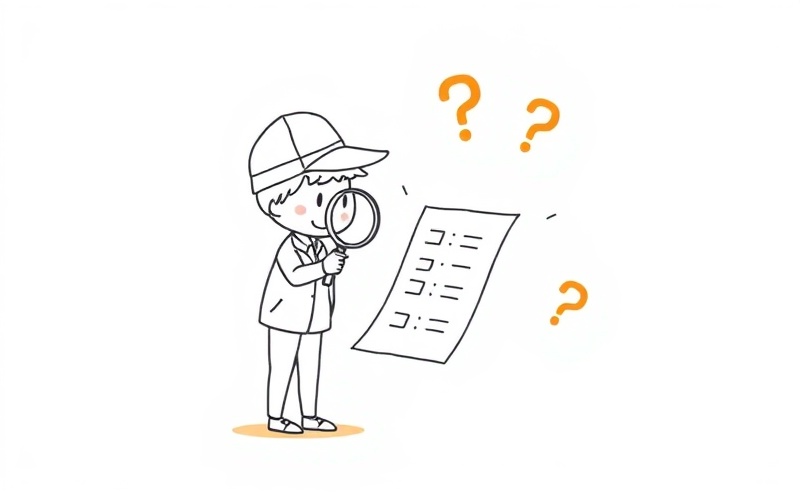
Test questions rarely ask in a vacuum. The wording itself contains clues that separate informed guessing from random selection. Test writers follow patterns, and once you spot them, you’ll read every question differently when figuring out how to pass exam without reading.
Start with the question stem—that’s the part before the answer options. This is where test makers reveal their hand. They often emphasize certain words or concepts for a reason. If a question asks “Which of the following is most likely to occur in acidic conditions?” the emphasis on “acidic” narrows your thinking immediately. You’re not searching for general chemistry knowledge; you’re hunting for something specifically related to acidity.
Pay attention to how questions are constructed. Is it asking what something “must be” or what it “could be”? That distinction matters. “Must be” questions demand certainty, while “could be” questions allow for possibility. This changes which answers work completely.
Context bleeds across questions more than you’d expect. If Question 12 mentions a specific historical date or scientific concept, that information might help you understand Question 15, even if they seem unrelated. Read through the entire test before diving deep into answers. You’ll often find passages, references, or details in later questions that clarify earlier ones.
Watch how test makers explain themselves within wrong answers. They include explanations that sound credible but miss the mark. The fact that an option explains itself in detail doesn’t make it correct—sometimes it’s just a well-constructed trap. Compare the quality of reasoning across all options, not just the confidence of their presentation.
Pattern Recognition and Answer Distribution Tricks
Test makers aren’t random. They follow patterns, and once you spot them, you gain an unfair advantage for how to pass semester exams without studying. One of the easiest patterns to exploit involves answer distribution. Most instructors try to spread correct answers fairly evenly across A, B, C, and D positions.
If you’ve selected “A” for the last six questions, something’s wrong. Human test designers unconsciously avoid repeating the same letter too many times in a row. When you’re stuck between two options and can’t decide, pick the letter you’ve used least recently. This simple observation works surprisingly well for those not studying for exams effectively.
The middle options—B and C—get chosen as correct answers more frequently than positions A and D. Test makers consciously avoid making the first option correct too often, fearing it looks too easy. They also avoid D because it feels like a “trick” position to many test-takers. This doesn’t mean always choose B or C, but when you’re genuinely clueless and forced to guess, the center options offer slightly better odds.
Watch for “all of the above” options carefully. They appear correct far more often than you’d expect. If you can confidently verify that even two of the individual options are definitely correct, “all of the above” becomes a strong candidate. Test makers use this option when they want to reward students who actually know the material.
Answer recycling happens more than institutions like to admit. If you encounter the same phrase or option wording twice within a test, that’s intentional repetition. Test makers sometimes repeat correct answers to reinforce concepts. Notice when options use identical phrasing—that consistency suggests correctness.
Look for contradictory pairs among the options. When two answers directly oppose each other, one of them is usually correct. Test makers include these deliberate opposites to force critical thinking. The other two options often serve as distractors, helping you master how to pass any test without studying.
Last-Minute Cramming Techniques That Actually Work
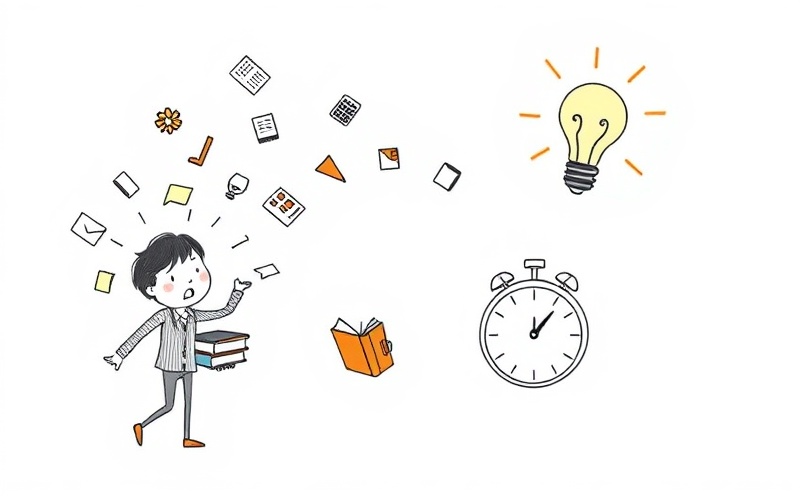
Last-minute cramming won’t replace genuine studying, but it can salvage your performance if you’re already walking into the testing center unprepared. The trick is knowing exactly where to focus your remaining time when learning how to pass a test when you didn’t study.
Speed-reading test materials works when you stop trying to understand everything and start hunting for patterns. Skim your textbook or notes looking specifically for bolded words, chapter summaries, and repeated concepts. Test makers almost always pull questions from material they emphasize multiple times. If a topic appears in three different chapters, it’s getting tested.
Flashcard apps become your friend during those final hours. Apps like Anki or Quizlet let you create rapid-fire review sessions. Instead of reading full paragraphs, you’re seeing one question and one answer repeatedly. This works because your brain responds to spaced repetition and active recall.
Basic formulas and definitions stick better than complex theories when time is tight. If you’re facing a science or math test, memorize the formula itself, not the derivation. Know what each variable represents. For humanities subjects, memorize a handful of key dates and names that context clues often surround.
Frequently tested concepts reveal themselves through patterns in your course materials. Look at what your instructor emphasized during lectures or what appeared on previous quizzes. These topics dominate final exams. Spend your cramming time on concepts that appeared multiple times, not obscure details mentioned once in passing.
Psychological Strategies to Boost Test Performance
Test anxiety creates a mental fog that makes even familiar information feel inaccessible. When your heart races and your palms sweat, your brain shifts into survival mode rather than problem-solving mode. The solution isn’t eliminating nervousness—that’s impossible—it’s channeling it productively when discovering how to top in exam without studying.
Positive self-talk rewires your internal narrative during the exam. Instead of thinking “I don’t know anything,” replace it with “I know more than I think” or “I can eliminate at least one wrong answer.” These statements sound simple because they are, but they work. Your brain responds to the language you use internally.
Breathing techniques ground you physically when mental pressure builds. Before you start the test, take five deep breaths—in through your nose for a count of four, hold for four, exhale for four. This activates your parasympathetic nervous system, the part responsible for calm. During the exam, if you feel panic creeping in on a difficult question, pause and repeat this breathing pattern.
Maintaining focus when underprepared requires mental discipline. Skip questions that trap you in endless deliberation. Mark them, move forward, and return after completing everything else. This prevents one difficult question from poisoning your entire test experience. Your goal isn’t perfection—it’s maximizing correct answers from the material you can access.
Emergency Test-Taking Tactics for Unprepared Students
Time management becomes your most valuable asset when walking into an exam unprepared. The instinct to spend five minutes wrestling with a single question you don’t understand is exactly wrong. Set a mental timer—spend roughly one minute per question on your first pass. If an answer doesn’t reveal itself within that window, move on.
Changing your answers creates unnecessary risk when you’re already guessing. Research consistently shows that first instincts, even when uncertain, outperform second-guessing. Your brain processes test questions subconsciously—pattern recognition, answer distribution, and linguistic cues all influence that initial choice faster than conscious deliberation. Only change an answer if you suddenly remember specific information that contradicts your first selection.
Other test-takers unknowingly broadcast information through their body language and answer-changing patterns. Watch your neighbor if they’re visible—if someone fills in the same bubble you just selected and then confidently moves forward, that reinforces your choice. Conversely, if they frantically erase an answer you’re considering, it signals uncertainty about that option. This isn’t cheating; you’re simply reading public cues.
Educated guessing relies on eliminating wrong answers rather than identifying correct ones. Read each option and immediately strike through any that seem obviously incorrect or contradictory to partial knowledge you possess. If a question asks about World War II and one option references the year 1990, that’s gone. If two options directly contradict each other, one is probably correct. Your goal isn’t confident certainty; it’s reducing the probability of guessing wrong.
Frequently Asked Questions
Can you really pass a test without studying at all?
While not ideal, strategic test-taking techniques can help you pass multiple choice tests even with minimal preparation. Success depends on the test difficulty, your natural knowledge base, and how well you apply guessing strategies.
What's the best strategy for guessing on multiple choice questions?
The most effective approach is process of elimination. Remove obviously wrong answers first, then choose from remaining options. When completely unsure, avoid extreme answers and consider options with qualifying words like 'usually' or 'often.'
Is it better to change answers or stick with your first choice?
Research shows that changing answers often improves scores when you have a logical reason for the change. However, avoid changing answers based purely on anxiety or second-guessing without new information.
How can I manage anxiety when I'm unprepared for a test?
Focus on what you can control: your test-taking strategy, breathing, and time management. Accept that you're unprepared and commit to doing your best with the techniques available to you.
Are there any patterns in how multiple choice answers are distributed?
Well-constructed tests typically distribute correct answers somewhat evenly across all options (A, B, C, D). Be suspicious if you've selected the same letter many times in a row, though don't change answers without good reason.