

Understanding ADHD and Its Impact on Learning
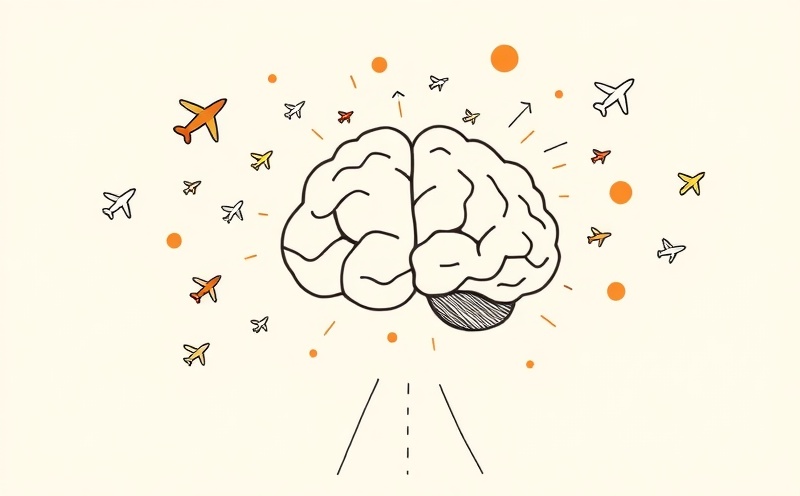
ADHD affects how your brain filters information, organizes tasks, and maintains focus. When you have ADHD, studying isn’t simply about lacking willpower—your neurological wiring processes attention and working memory differently than people without ADHD.
The core challenge lies in executive function. This system controls planning, impulse control, task initiation, and time management. Someone with ADHD might understand calculus perfectly but struggle to start homework, estimate how long it will take, or switch between subjects without mental friction.
Common ADHD symptoms that sabotage studying include constant distraction by background noise, difficulty organizing materials, trouble prioritizing between tasks, and racing thoughts that derail focus. Many people also experience rejection-sensitive dysphoria—harsh self-judgment that follows a study mistake, creating anxiety that compounds concentration problems.
Traditional study methods fail when learning how to study with ADHD because they assume neurotypical attention spans and executive function. A quiet library, a single textbook, and a two-hour block of time may actually paralyze someone with ADHD.
ADHD impacts studying through four primary mechanisms: (1) working memory limitations that make retaining information harder, (2) attention regulation issues that cause distractibility even in quiet environments, (3) executive dysfunction that delays task initiation and organization, and (4) emotional dysregulation that makes frustration intensify during study sessions.
Creating an ADHD-Friendly Study Environment
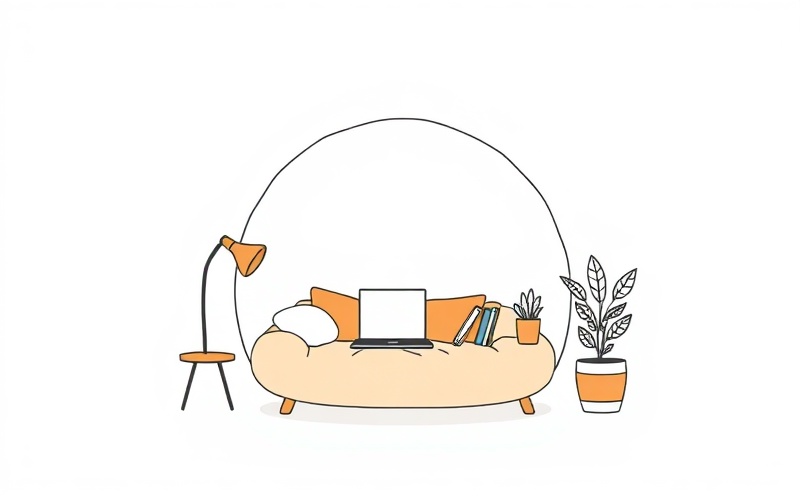
Your study space directly impacts your ability to concentrate when figuring out how to study with ADHD. Unlike neurotypical students who might thrive in a silent library, people with ADHD often need environmental customization to reduce the cognitive load that triggers distraction.
Start by identifying your actual distractions rather than assuming what should work. Some people with ADHD find complete silence intolerable because it amplifies internal racing thoughts. Others need visual simplicity to prevent attention-grabbing clutter from hijacking focus.
ADHD-friendly study environments reduce cognitive demand by controlling three variables: (1) sensory input that competes for attention, (2) environmental friction that delays task initiation, and (3) visual complexity that overwhelms working memory. This means clearing desk surfaces of unrelated items, positioning your chair to face your study material rather than a doorway, and using consistent lighting that reduces eye strain.
Lighting matters more than people realize. Overhead fluorescent lights can trigger sensory overload and increase restlessness in people with ADHD. Position a warm desk lamp at shoulder height so light reflects onto your materials without creating glare.
Your chair and desk height significantly affect focus duration. Your feet should rest flat on the floor, knees at 90 degrees, and elbows aligned with desk height. Poor posture activates fidgeting behavior as your body compensates for discomfort.
Background sound can actually enhance focus for many people with ADHD. Try instrumental music, lo-fi beats, or ambient noise apps like Brown Noise or Noisli. Start at low volume—just enough to provide consistent auditory input without requiring attention.
Organization systems prevent the executive dysfunction that makes you unable to start studying. Use labeled folders or digital tags for each subject, sorted by priority or date. Keep writing supplies in the same spot daily.
Time Management and Study Schedule Strategies
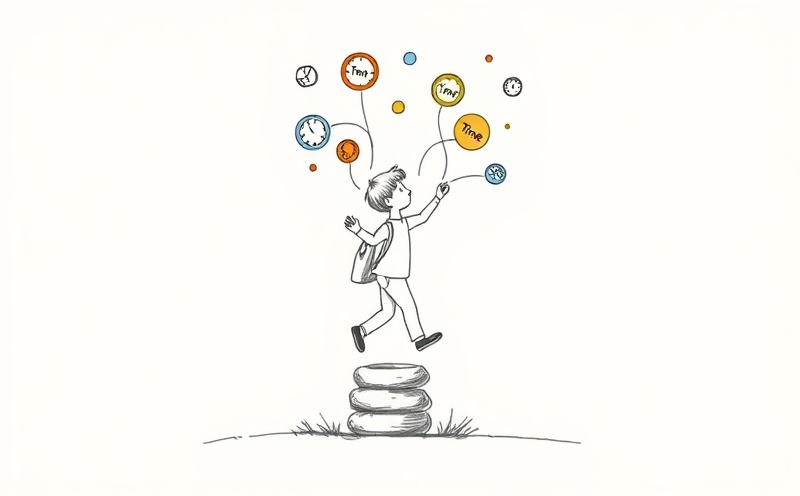
Effective time management represents a crucial component when learning how to study with ADHD. Your brain requires working with natural rhythms rather than fighting against them. Traditional study schedules impose rigid blocks that ignore how ADHD affects energy, motivation, and sustained attention.
Your energy levels fluctuate throughout the day based on dopamine availability, not discipline. Some people with ADHD hit peak focus in early morning, others find their best concentration window at 2 PM or late evening. Track your focus quality for one week—note the time you felt most alert and when distractions felt hardest to resist.
Schedule challenging subjects during your peak energy window and routine review tasks during low-energy periods. If you concentrate best between 9 AM and 11 AM, reserve that time for new material or problem-solving. Use afternoon slots for reviewing notes, organizing materials, or completing easier tasks that don’t require sustained attention.
The Pomodoro Technique—25 minutes of focused work followed by 5-minute breaks—sounds ideal for ADHD but rarely works as designed. Your ADHD brain doesn’t follow 25-minute cycles consistently. You might hyperfocus for 50 minutes or lose concentration after 8 minutes.
The power of adaptation lies in consistency, not the specific number. Choose a timer interval that you can actually complete without resistance 80% of the time. A 12-minute session you finish beats a 25-minute session you abandon after frustration.
- Set a timer for your baseline interval (start with 10-15 minutes if 25 feels overwhelming)
- Study one subject or single task only—no switching topics mid-session
- When the timer sounds, take a physical break: walk, stretch, or get water for 3-5 minutes
- Complete 3-4 focused sessions, then take a longer 15-30 minute break
- Increase your interval by two minutes weekly if sessions feel manageable
Breaking tasks into smaller chunks prevents the overwhelm that triggers avoidance. Your brain sees “study for biology test” and feels paralyzed. It sees “review photosynthesis diagrams for 10 minutes” and can initiate action.
Create a task hierarchy by listing everything that needs studying, then breaking each item into 10-15 minute chunks. Instead of “read chapter 5,” your list reads: “read pages 101-110,” “create flashcards for key terms,” “answer end-of-chapter questions 1-5.” Each chunk becomes a mini-goal you can complete in one focused session.
Timers and reminders serve different functions in ADHD study routines. A timer creates structure and prevents hyperfocus from stealing hours you needed for other subjects. Set alarms for: when to start studying, when to switch topics, and when to take breaks.
Active Learning Techniques for ADHD Students
Active learning transforms studying from passive reading into movement-based engagement that matches how ADHD brains actually process information. Instead of highlighting text or rewriting notes—tasks that bore many people with ADHD—active techniques force your brain to manipulate material and organize it spatially.
Movement-based learning works because physical activity increases dopamine and blood flow to your prefrontal cortex. Walking while reviewing flashcards, pacing while reciting material, or using hand gestures to represent concepts keeps your body engaged while your brain processes information.
Stand at a desk or against a wall while studying instead of sitting. Walk in circles while reciting key facts or definitions aloud—hearing yourself speak engages auditory memory in addition to visual memory. Create hand motions or gestures that represent concepts; if you’re learning photosynthesis, physically mime sunlight entering a leaf.
Three movement-based learning methods for ADHD: Walk-and-review involves pacing while reading flashcards or notes aloud for 10 minutes per subject. Standing study positions you at a standing desk or high table where your body naturally shifts weight and adjusts posture, preventing the fidgeting that comes from static sitting. Kinesthetic gestures pair each concept with specific hand movements, encoding information through motor memory that strengthens recall during tests.
Visual and kinesthetic methods bypass the working memory limitations that make traditional note-taking frustrating. Color-coded systems, mind maps, and spatial organization transform abstract information into visual patterns your brain can recognize and retrieve.
Mind mapping starts with a central concept written in the middle of a large page. Branch outward with related ideas, using different colors for each branch and adding small drawings or icons. Your brain recognizes spatial relationships between concepts rather than memorizing linear lists.
Color-coding works when applied systematically rather than randomly. Assign one color to each topic, concept category, or importance level. Use the same color scheme consistently across all materials—if blue always means “definition” and red always means “important exception,” your brain learns to expect this pattern.
Five visual strategies that enhance ADHD retention: Mind maps transform linear notes into spatial networks with central concepts branching into related ideas using colors and icons. Graphic organizers—tables, flowcharts, Venn diagrams—structure relationships between concepts visually instead of descriptively. Color-coding systems assign consistent colors to categories, allowing rapid visual recognition during review. Sketch notes combine small drawings with minimal text, engaging visual processing while reducing cognitive load. Large-format writing on poster paper creates physical space between ideas, preventing visual crowding that overwhelms working memory.
Technology tools extend active learning by adding gamification, immediate feedback, and adaptive difficulty that keep your brain engaged. Apps like Anki use spaced repetition—showing you cards right before you’re about to forget them—which exploits how dopamine-driven brains need novelty and progressive challenge.
Spaced repetition apps work with ADHD because they eliminate the decision-making that causes avoidance. Anki tells you exactly which cards to review today, removing the executive burden of deciding what needs studying. The algorithm learns your personal forgetting curve and shows increasingly difficult material as you master easier concepts.
Quizlet’s “Learn” mode presents material progressively—definitions appear first, then you’re tested, then you advance to harder questions. “Flashcard” mode lets you set your own pace, ideal for hyperfocus sessions where you want to push faster. “Gravity” mode turns studying into an arcade game where you dodge falling cards while answering questions correctly.
Four technology tools that support ADHD studying: Anki delivers spaced repetition flashcards using an algorithm that shows you material right before you forget it, eliminating decision-making about what to study. Quizlet offers active retrieval through multiple game modes—Learn mode guides you progressively, while Gravity mode gamifies drilling with arcade-style gameplay. Notion creates interconnected digital notes with color-coding, toggle lists, and database sorting that organize information without the friction of rewriting. Forest app rewards focused work time by growing virtual trees that die if you leave the app, creating incentive-based timer sessions.
Memory techniques and mnemonics work particularly well for ADHD because they transform abstract material into concrete, memorable imagery or patterns. Your brain retains specific stories, vivid mental images, and unusual associations better than generic facts.
The method of loci leverages your brain’s exceptional spatial memory. Imagine a familiar place—your home, a route you walk daily, or a building you know well. Assign each concept you’re studying to a specific location in that space. Walk through this mental location repeatedly, “visiting” each spot and recalling what you placed there.
Create acronyms for related items or step sequences. The order of planets becomes “My Very Educated Mother Just Served Us Nine Pizzas.” The scientific method becomes “HYPOTHESIS, EXPERIMENT, ANALYSIS, CONCLUSION.” Instead of memorizing nine separate items, you memorize one phrase.
How memory techniques reduce ADHD working memory strain: The method of loci assigns concepts to locations in an imagined familiar building, transforming abstract information into spatial navigation that engages hippocampal memory. Acronyms compress multiple concepts into single phrases, reducing working memory load while increasing recall speed. Story-chaining converts isolated facts into narrative sequences with emotional content and movement, leveraging your brain’s natural story-retention strength. Visual mnemonics pair concepts with bizarre mental images—the weirder the image, the stronger the retention through novelty preference.
Frequently Asked Questions
What is the best time of day for ADHD students to study?
Most ADHD students focus best in the morning when dopamine levels are naturally higher and mental fatigue hasn't set in. However, individual patterns vary, so track your energy and attention levels throughout the day to identify your personal peak focus times.
How long should ADHD study sessions be?
ADHD study sessions should typically last 15-25 minutes for focused work, followed by 5-10 minute breaks. This modified Pomodoro approach prevents mental fatigue and maintains engagement better than longer traditional study periods.
Can medication help with studying if you have ADHD?
ADHD medications can significantly improve focus, attention span, and executive functioning during study sessions. However, medication should be part of a comprehensive approach that includes behavioral strategies, environmental modifications, and proper study techniques.
What are the biggest study mistakes ADHD students make?
Common ADHD study mistakes include trying to study for too long without breaks, attempting to multitask, studying in distracting environments, not breaking down large tasks, and comparing themselves to neurotypical study methods instead of finding personalized approaches.