

Understanding How ADHD Affects Your Study Sessions
ADHD fundamentally reshapes how your brain processes learning. The condition affects three core areas that directly impact studying with ADHD: your ability to manage complex tasks, maintain focus on demand, and retain information temporarily while working through problems.
Executive function—the mental system that plans, organizes, and executes tasks—often struggles with ADHD. You might sit down to study algebra but find yourself rearranging your desk, checking your phone, or starting three different subjects without finishing any. This isn’t laziness. Your brain’s prefrontal cortex, which handles task initiation and prioritization, works differently, making it harder to bridge the gap between intention and action.
Attention regulation creates another obstacle when studying with ADHD. While many believe ADHD means constant distraction, the reality is more complex: you might hyperfocus intensely on one task while struggling to shift to another, or you might find external stimuli (a ticking clock, background noise, thoughts about dinner) hijack your focus entirely. This isn’t about willpower—it’s about how your dopamine system responds to stimulation.
Working memory—your brain’s temporary storage for information you’re actively using—typically holds less capacity with ADHD. You might read a paragraph, reach the end, and realize the beginning has already vanished from your mental workspace. This directly impacts math problems, language learning, and any task requiring you to juggle multiple pieces of information simultaneously.
ADHD impacts learning through four primary mechanisms: Executive function challenges create difficulty initiating and organizing study sessions. Attention regulation issues cause hyperfocus on non-academic tasks or susceptibility to environmental distractions. Working memory limitations reduce your ability to retain and manipulate information during learning. Hyperactivity and fidgeting reflect your nervous system’s need for movement and stimulation, making it hard to sit still for extended periods.
Hyperactivity and fidgeting serve a purpose—your body seeks sensory input to help regulate dopamine levels. Sitting motionless while studying actually makes concentration harder, not easier, for many people with ADHD.
Essential Study Environment Modifications for ADHD
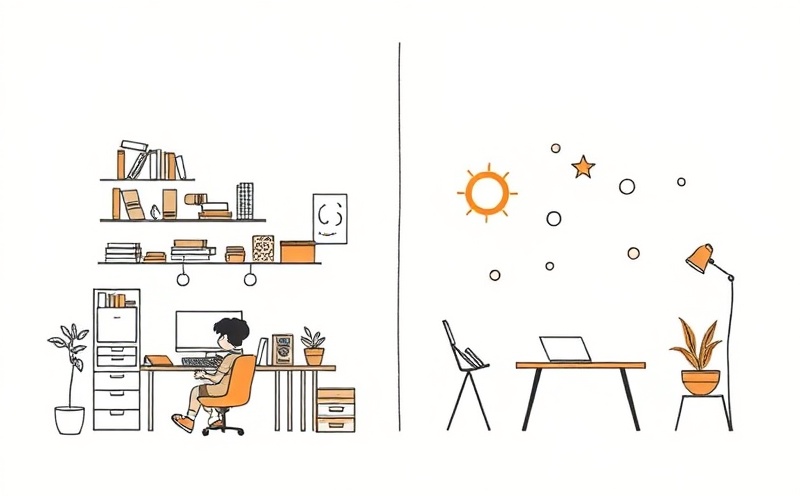
Your study environment directly determines whether your ADHD brain can access its learning capacity or gets derailed by competing stimuli. A thoughtfully designed space reduces the friction between intention and action, eliminating the hidden obstacles that make studying with ADHD feel impossible.
Start by auditing what captures your attention uninvited. Visual clutter—posters, books, supplies, multiple objects in your line of sight—creates a constant cognitive load. Each item competes for your attention’s already-limited bandwidth. Remove everything from your desk except what you’re actively studying. Store textbooks, notebooks, and supplies in closed containers or drawers.
Auditory distractions affect ADHD learners more intensely than neurotypical students. Background noise, ticking clocks, refrigerator humming, and traffic sounds all demand your attention because your brain struggles to filter irrelevant sensory input. Use noise-canceling headphones or play consistent ambient sound—brown noise, rain sounds, or lo-fi music at low volume—to create a stable auditory environment that masks unpredictable noise.
Your designated study space should exist in one physical location whenever possible. Your brain begins associating that spot with focus and learning mode. This doesn’t mean an elaborate desk setup; it means a consistent chair, table, and corner where studying happens regularly. Consistency builds automaticity—your brain shifts into study mode more quickly because environmental cues trigger the habit.
Lighting and seating shape your physical comfort, which directly impacts how long you can sustain attention while studying with ADHD. Poor lighting causes eye strain, triggering your brain to seek relief through distraction. Use bright, cool-toned light (4000-5000K) positioned to eliminate shadows on your workspace. Your chair matters equally—you need lumbar support and the ability to move slightly.
- Install a task timer app that breaks study sessions into 25-30 minute blocks with 5-minute movement breaks
- Use website blockers (Freedom, Cold Turkey, Forest) to prevent access to social media and entertainment sites during study windows
- Enable “Do Not Disturb” mode on your phone and place it in another room, not on your desk
- Try the Pomodoro Technique with a visual timer so you can see time passing, reducing anxiety about how long you need to focus
- Use note-taking apps like Obsidian or Roam Research that let you organize information non-linearly, matching how ADHD brains often work better than sequential outlining
Technology can work for you or against you when studying with ADHD. The same device that pulls you into distraction can enforce boundaries and structure. Apps that block distracting websites create friction for impulsive clicking. Timers transform vague study sessions into concrete, achievable chunks.

Time Management and Focus Techniques That Work
Time management with ADHD requires working with your brain’s dopamine needs rather than fighting against them. The goal isn’t fitting into a neurotypical schedule—it’s finding what actually keeps you studying instead of drifting into distraction.
The Pomodoro Technique—studying for 25 minutes, then taking a 5-minute break—works for many ADHD learners, but the standard version often fails because it doesn’t account for hyperfocus or variable attention spans. Some days 25 minutes feels impossibly long; other days you’d lose momentum if you stopped. Adapt the technique by experimenting with 15, 20, or 40-minute blocks until you find your personal sweet spot.
Use a timer you can actually see counting down when studying with ADHD. Auditory alerts create stress; watching time visually reduces anxiety about how much longer you need to focus. Apps like Be Focused, Pomofocus, or even a physical sand timer give your brain concrete feedback. This visibility removes the uncertainty that triggers distraction-seeking behavior.
Breaking large assignments into smaller chunks reduces the cognitive overwhelm that paralyzes ADHD learners. Instead of “study for chemistry,” create micro-tasks: read section 3.1 (15 minutes), complete 5 practice problems (20 minutes), make flashcards for terminology (10 minutes). Each micro-task becomes one Pomodoro block with a clear endpoint, eliminating the vague dread of a massive assignment.
Your energy levels fluctuate throughout the day based on dopamine availability, not willpower. Some ADHD brains peak in the morning; others hit stride in late afternoon or evening. Track when you naturally focus best—when you lose track of time, when distractions feel easiest to ignore, when your brain feels “on.”
Reminders serve a different function for ADHD brains than for neurotypical people. You’re not forgetting that you need to study; you’re forgetting that you planned to study because starting feels like friction. Set reminders 15 minutes before a study session begins. This buffer gives your brain time to transition tasks—you’re not jerked abruptly from scrolling to studying with ADHD demands.
Combine movement with focus time. The fidgeting and restlessness isn’t a distraction to eliminate—it’s your nervous system requesting stimulation. During study breaks, do 20 jumping jacks, walk around your block, or dance for 30 seconds. Movement increases dopamine and blood flow, actually preparing your brain for better focus during the next block.
Active Learning Strategies and Memory Enhancement
ADHD brains encode information more efficiently when multiple senses activate simultaneously. Reading alone—visual input only—leaves working memory underloaded, which is precisely when distraction hijacks your focus. When you engage sight, sound, and movement together, you activate broader neural networks and increase dopamine release, making information stick harder and longer.
Color-coded highlighting serves your ADHD brain differently than neurotypical learners when studying with ADHD. Instead of highlighting entire sentences passively, use one color for definitions, another for examples, a third for formulas or key relationships. This forces active decision-making while reading—your brain must categorize information rather than gliding passively through text.
Speaking information aloud transforms passive reading into active production. When you verbalize what you’re learning—explaining a chemistry concept to an imaginary student, reading your notes out loud, or talking through a problem step-by-step—you activate motor cortex areas involved in speech. The added benefit: hearing your own voice catch on unclear explanations shows you exactly where understanding breaks down.
Multi-sensory learning engages sight, sound, movement, and touch simultaneously to activate broader neural networks and increase dopamine availability. Read notes aloud while walking, use color-coded categories while highlighting, draw diagrams while explaining concepts verbally, or teach material to a study partner while standing. Each additional sensory input strengthens encoding and makes distraction harder because your brain’s attention capacity is fully occupied by learning rather than available for environmental hijacking.
The Cornell Note-Taking System works reasonably well for ADHD learners, but only if you adapt it for non-linear thinking. Traditional note-taking forces sequential organization that often feels constraining for ADHD brains when studying with ADHD. Instead, use mind-mapping: place a central concept in the middle of your page, then branch outward with related ideas, examples, and connections.
Live-typing notes during lectures often backfires for ADHD learners because transcription consumes cognitive resources needed for listening and understanding. You end up with verbatim text you never review, and the act of typing prevented actual learning. Instead, listen actively for the first 5-10 minutes without writing anything.
- Mind-map instead of outlining: Place the main topic in the center, branch outward with related concepts, and connect ideas with labeled arrows showing relationships. This non-linear format accommodates ADHD brains that work associatively rather than sequentially.
- Listen first, then capture key ideas: Spend the first portion of study time actively listening or reading for understanding. Write only main concepts in your own words, using abbreviations and visual connections rather than complete sentences.
- Color-code by category: Assign one color to definitions, another to examples, another to applications or formulas. This active categorization forces engagement and creates visual memory anchors.
- Review within 24 hours: ADHD working memory deteriorates rapidly; reviewing your notes the next day prevents information loss and allows you to expand abbreviated notes while they’re still fresh enough to decode.
The memory palace technique—mentally placing information in specific locations within an imagined space—works exceptionally well for ADHD learners because it hijacks your natural hyperfocus ability. Instead of fighting your brain’s tendency to visualize vividly, you harness it. Choose a familiar route: your home, your walk to school, a grocery store you know well.
Visualization taps into your ADHD brain’s strength in spatial and vivid imagery when studying with ADHD. Instead of memorizing abstract facts, create mental movies. Learning about photosynthesis? Imagine yourself shrinking down and traveling inside a leaf, watching sunlight strike chlorophyll molecules, seeing electrons jump energy levels, watching glucose molecules assemble.
Memory palace technique assigns study material to specific locations within a familiar imagined space, then retrieves information by mentally “walking” through that environment. Choose a route you know intimately—your home, your commute, a building you visit regularly. Break material into chunks and place each chunk at a specific location. To recall, mentally visit each location in sequence. This technique works for ADHD learners because it engages your natural strength in spatial visualization and creates bizarre, personally-meaningful connections that stick harder than abstract memorization.
Spaced repetition—reviewing material at increasing intervals—works against ADHD’s natural tendency toward inconsistency, so you need a system that removes decision-making. Apps like Anki automate spacing entirely: they present flashcards at intervals scientifically designed to maximize retention before forgetting occurs. Set Anki to review cards daily for 15 minutes rather than in massive weekly cram sessions.
Test yourself actively instead of passively re-reading when studying with ADHD. Cover the right side of your notes and try retrieving information from memory. Create practice quizzes. Explain concepts from memory to a study partner. Each retrieval attempt strengthens the neural pathway far more than re-reading creates.
Teach-back method accelerates retention specifically because explaining forces you to recognize gaps in understanding. Study a concept, then explain it to a real or imaginary listener without looking at notes. Teaching also re-engages working memory, motor cortex (for gesturing and speaking), and auditory processing—multiple senses simultaneously, which your ADHD brain uses to lock information into long-term storage more effectively than reading alone achieves.
Frequently Asked Questions
What are the best study apps for students with ADHD?
Top ADHD study apps include Forest for focus blocking, Notion for organization, Anki for spaced repetition, Focus Keeper for Pomodoro timing, and SimpleMind for mind mapping. These tools address specific ADHD challenges like distractibility and organization.
How long should ADHD students study at one time?
ADHD students should study in 15-25 minute focused sessions with 5-10 minute breaks. This modified Pomodoro approach works better than traditional 25-50 minute sessions, allowing for attention span limitations while maintaining productivity.
Can medication help with studying if you have ADHD?
ADHD medication can significantly improve focus, working memory, and executive function during study sessions. However, it works best when combined with proper study strategies and environmental modifications. Consult your healthcare provider about timing medication with study schedules.