

The Quality vs. Quantity Study Problem
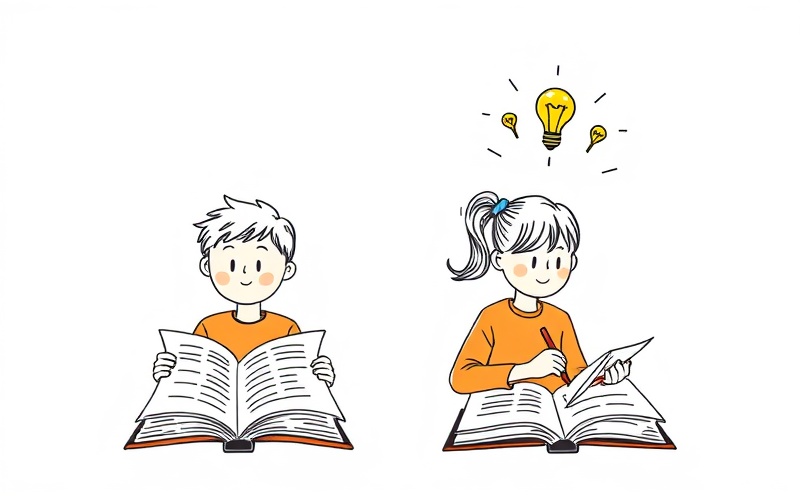
Most students confuse hours spent with actual learning progress. You can sit with a textbook for five hours and absorb almost nothing if you’re passively reading without engagement. Your brain needs struggle, questioning, and retrieval practice to convert information into long-term memory.
The fundamental issue is that passive activities—highlighting, rereading notes, watching videos—feel productive but create an illusion of competence. You recognize information when you see it again, which feels familiar, but recognition isn’t the same as recall. When you study for hours but still fail exams, this recognition versus recall gap is usually the culprit.
Active learning requires deliberate engagement with material: You must test yourself through practice problems, explain concepts aloud without notes, write from memory, or teach the content to someone else. These activities force your brain to retrieve and manipulate information rather than simply expose you to it. Surface-level review—skimming chapters or reviewing highlighted notes—creates weak memory traces that collapse under exam pressure, while active struggle during study strengthens neural connections and builds retrievable knowledge.
The time-versus-retention gap explains why students who study six hours with passive methods often score lower than peers who study two hours using active techniques like spaced retrieval practice and interleaved problem-solving.
Memory Formation: Why Your Brain Forgets What You Learned
Your brain doesn’t store memories like a computer saves files. Memory formation is a biological process involving protein synthesis, neural pathway strengthening, and repeated activation over time. Hermann Ebbinghaus discovered in 1885 that we forget information rapidly after learning it—a phenomenon called the forgetting curve.
Without intentional review, you lose approximately 50% of new information within 24 hours, 70% within a week, and 80% within a month if that material never surfaces again in your mind. This explains why do I fail exams even when I study—the material simply hasn’t made it to long-term storage.
Cramming exploits a temporary vulnerability in your brain. When you study intensively the night before an exam, you’re transferring information into working memory—a shallow storage system holding about 7 items simultaneously for seconds to minutes. This feels like you “know” the material because you can recall it immediately. But working memory is fragile.
The forgetting curve describes how rapidly memory decays without review: You retain roughly 50% of learned information after one day, 30% after three days, and 20% after one week without practicing retrieval. Each time you actively recall information, the decay rate slows and the memory strengthens. Spacing reviews across days and weeks—rather than massing them into one session—forces your brain to retrieve information when it’s partially forgotten, triggering stronger reconsolidation.
Sleep deprivation during cramming sessions impairs memory consolidation, the biological process where your hippocampus transfers information to the prefrontal cortex for long-term storage. You walk into the exam with activated but unconsolidated knowledge that evaporates under stress.
Effective memory consolidation requires sleep, spacing, and retrieval practice. During sleep, your brain replays neural patterns from the day, strengthening synaptic connections and transferring declarative memories (facts, concepts) into stable long-term storage. This is why students who cram all night sacrifice the very biological process needed to cement learning.
The timing gap between learning and exams determines whether knowledge survives. Material learned two weeks before an exam using distributed practice remains accessible because consolidation had time to complete across multiple sleep cycles and spacing intervals. Material crammed 12 hours before hasn’t entered long-term storage yet.
Poor Study Techniques That Sabotage Your Success
Highlighting textbooks and rereading notes feel productive because they’re visible, concrete actions. You buy a highlighter, mark passages in color, flip through pages again—the ritual mimics studying. Your brain registers the material as familiar when you encounter it a second time, creating what researchers call the fluency illusion.
This familiarity tricks you into believing you’ve learned something when you’ve only exposed yourself to it. Exam performance plummets because highlighting builds recognition, not recall. You can identify the correct answer when you see it among four choices, but you cannot generate that answer from memory when the exam presents only a blank space.
Self-testing is the inverse of these passive methods, yet most students skip it entirely. When you close the textbook and try to write down what you remember—without looking—your brain must retrieve information rather than recognize it. This struggle is uncomfortable and reveals gaps that highlighting never exposes. Those gaps are exactly what cause students to find themselves studying a lot but failing.
Three study habits that sabotage exams: (1) Highlighting and rereading—these create fluency illusion where familiarity feels like learning but only builds recognition, not the recall exams demand; (2) Avoiding self-testing—skipping practice problems means you never discover what you actually don’t know until exam day; (3) Multitasking while studying—dividing attention between your notes and your phone reduces learning efficiency by approximately 40% because your prefrontal cortex cannot maintain deep focus across multiple cognitively demanding tasks simultaneously.
Multitasking during study sessions fractures attention and prevents the deep encoding your brain needs to transfer information into long-term storage. Checking your phone every three minutes, studying while watching videos, or listening to music with lyrics all divide your cognitive load. Your prefrontal cortex can only concentrate fully on one cognitively demanding task at a time.

Test Anxiety and Performance Under Pressure
Test anxiety hijacks your nervous system during high-stakes moments, overriding the knowledge you spent weeks building. When you sit down for an exam, your amygdala—the brain’s threat detector—can trigger a fight-or-flight response if you’ve internalized the test as dangerous. This floods your bloodstream with cortisol and adrenaline, stress hormones designed to prepare your body for physical threat.
But an exam isn’t a predator. These hormones narrow your attention, spike blood pressure, and divert blood flow away from your prefrontal cortex—the exact brain region you need for complex thinking, working memory, and retrieval of studied material. Your body is chemically optimized for running from danger, not for recalling the mitochondrial function you memorized three weeks ago.
Test anxiety occurs when stress hormones like cortisol and adrenaline flood your system during exams, narrowing attention, reducing oxygen to your prefrontal cortex, and triggering physical symptoms like trembling and shallow breathing that impair memory retrieval. These hormones evolved to handle physical threats, not cognitive challenges, so they actively work against the brain functions exams demand.
The physical symptoms of test anxiety create a vicious cycle that tanks performance. Your heart races, hands shake, stomach churns, and breathing becomes shallow. Shallow breathing reduces oxygen flow to your brain, impairing executive function and memory retrieval further.
The relationship between preparation confidence and test anxiety reveals an uncomfortable truth: students who study passively often experience worse anxiety than those who prepare actively, even if both spent similar hours. Why? Because passive learners genuinely don’t know the material well. Somewhere in your unconscious mind, you recognize this gap between your preparation methods and exam demands.
The confidence gap between preparation methods matters most during the exam itself. When you encounter a difficult question, your interpretation depends on your study history. If you highlighted and reread passively, your brain interprets difficulty as a signal that you’re failing—because everything felt manageable during passive review. This triggers anxiety.
Managing test anxiety also requires understanding that some nervousness is productive. A moderate level of stress hormones actually enhances performance—psychologists call this the Yerkes-Dodson law. The problem emerges when stress exceeds your optimal zone, typically when you feel unprepared or when you’ve developed conditioned anxiety from previous exam failures.
- Study using active retrieval methods (practice tests, self-explanation, spaced review) rather than passive methods—this builds genuine confidence grounded in repeated success, not just in feeling familiar with material.
- Take multiple timed practice exams before the real test—each successful attempt under time pressure teaches your nervous system that you can retrieve knowledge even when stressed, reducing the threat response during the actual exam.
- Use controlled breathing during the exam—slow, deep breathing activates your parasympathetic nervous system (your body’s calming response), counteracting cortisol’s effects and restoring oxygen flow to your prefrontal cortex.
- Reframe difficulty as normal—if you’ve practiced on challenging material, remind yourself that struggling on exam questions means you’re in the right difficulty zone, not that you’re failing.
Misunderstanding What the Exam Actually Tests
Most students misidentify what determines exam performance by treating memorization as learning. You can recite the definition of photosynthesis—the process converting light energy into chemical energy in glucose—without understanding how chlorophyll absorbs photons, how electron transport chains function, or why C3 and C4 pathways differ. The exam tests understanding, not recitation.
When questions ask you to predict how a plant adapts to drought or explain why certain wavelengths matter more than others, memorized definitions crumble. You’ve built shallow knowledge in isolation, but exams integrate concepts across domains and demand reasoning. This mismatch explains why you study for hours but still fail exams.
Most students study for low-level recall questions by memorizing facts and formulas, then encounter mid- and high-level application questions on exams that demand understanding relationships between concepts. Your exam grade crashes because 70% of questions require you to apply knowledge in new contexts or analyze scenarios you’ve never seen, but you’ve only practiced recognition of isolated facts.
Exams operate on multiple cognitive levels, each requiring different study approaches. Low-level questions test recall: “What is the formula for calculating acceleration?” Mid-level questions test comprehension and application: “A car accelerates from 0 to 60 mph in 8 seconds. Calculate the acceleration.” High-level questions test analysis and synthesis: “Two cars accelerate at different rates due to engine differences. Design an experiment to determine which engine is more efficient, accounting for fuel consumption and power output.”
Identifying the actual cognitive demand of your exam requires analyzing past papers and rubrics systematically. Your instructor signaled what matters through the questions they’ve asked before. If 40% of last year’s exam featured word problems requiring multi-step reasoning, this year’s exam will likely follow that same pattern.
Yet most students ignore previous exams entirely, treating each test as a surprise. You study only what feels important to you rather than what the exam actually emphasizes. Organic chemistry exams heavily weight mechanisms and electron movement, not just naming conventions. Physics exams test problem-solving with equations, not just conceptual vocabulary.
Studying facts instead of understanding manifests as a gap between study confidence and exam performance. During study sessions, you feel prepared because you can recognize correct answers—someone says “mitochondria” and you know it’s the powerhouse of the cell. But when an exam presents an unfamiliar cell scenario and asks what organelle is most abundant in liver cells (which do massive ATP production), you freeze.
- Analyze three previous exams or practice tests to map which cognitive levels appear most: note how many questions demand recall (10%), comprehension (20%), application (40%), or analysis (30%), then weight your study time accordingly.
- For each concept you study, practice explaining it in contexts different from your textbook—apply photosynthesis to desert adaptation, use Newton’s laws to analyze sports movements, connect economic principles to current news articles.
- Study without answer keys first—attempt practice problems, then check answers—rather than reading solutions immediately, which trains recognition instead of the problem-solving exams demand.
- Create questions at higher cognitive levels yourself: not “What is X?” but “When would X apply and when wouldn’t it?” and “How would X change if we altered this variable?”
Sleep, Nutrition, and Lifestyle Factors That Impact Performance
Most students optimize their study methods while ignoring the biological foundation those methods depend on. You can employ perfect active recall strategies, but if your brain lacks the neurochemical conditions to consolidate memories, hours of studying produce minimal retention. Exam performance isn’t determined solely by what you study—it’s determined by the physiological state of the brain doing the studying.
Sleep deprivation decimates memory consolidation, the process by which your brain converts short-term study into long-term retention. During sleep, particularly during REM and deep slow-wave sleep stages, your hippocampus replays the day’s learning experiences. This replay strengthens neural connections and transfers information from working memory into long-term storage.
Sleep deprivation prevents hippocampal consolidation—the neurological process where memories transfer from short-term to long-term storage—so material studied the night before an exam remains fragile and retrieval-resistant. A student sleeping four hours before an exam performs substantially worse than one sleeping eight hours on the same material, regardless of study duration, because the brain never converted study into lasting memory.
Without adequate sleep, this consolidation process never occurs. You study material, leave it in working memory, sleep for four hours instead of seven, and wake with the information still fragile and temporary. By evening, it’s gone. Research on all-nighters reveals the catastrophic cost: a student who studies until 3 a.m. and sleeps for two hours before an 8 a.m. exam performs worse than one who studied less but slept eight hours.
The memory consolidation failure from sleep deprivation extends beyond simple forgetting. Sleep deprivation impairs your prefrontal cortex’s ability to retrieve information even if consolidation did occur. Your working memory capacity shrinks, so you can hold fewer facts simultaneously while problem-solving.
The relationship between sleep timing and exam performance also matters. Studying new material close to bedtime produces better consolidation than studying the same material hours before sleep, because your brain consolidates what you’ve most recently learned first. This is why a 30-minute study session immediately before sleep often outperforms two hours of studying in the afternoon.
Nutritional deficiency creates a second barrier to exam performance, one that operates through sustained glucose availability and micronutrient-dependent enzyme function. Your brain consumes 20% of your body’s total energy despite comprising only 2% of body mass. During intense studying and exam-taking, cognitive demand spikes, and your brain’s glucose requirements increase.
- Eat a balanced breakfast containing protein and complex carbohydrates 1-2 hours before studying or exams to maintain steady glucose levels, preventing the energy crashes that create brain fog and impair working memory.
- Prioritize B vitamins (found in whole grains, eggs, leafy greens), iron (red meat, spinach, legumes), and magnesium (nuts, seeds, dark chocolate) as micronutrient cofactors that your brain requires for neurotransmitter synthesis and memory consolidation.
- Avoid refined sugars and caffeine on exam morning—the energy spike is followed by a crash that occurs during the test, leaving you fatigued and cognitively depleted.
Food quality matters as much as caloric intake. A breakfast of refined carbohydrates—white toast, sugary cereal, pastries—triggers rapid glucose spikes followed by crashes within two to three hours. You feel sharp initially, then foggy and fatigued by mid-morning. A breakfast combining protein, complex carbohydrates, and fat—eggs with whole-grain toast and avocado—stabilizes glucose release across four to five hours.
Exercise emerges as one of the highest-leverage interventions for exam performance, yet most students eliminate it during exam periods when they should increase it. Aerobic exercise triggers neurogenesis in your hippocampus—the creation of new neurons in the brain region responsible for memory formation. A single bout of moderate-intensity aerobic activity (30 minutes of running, cycling, or brisk walking) increases brain-derived neurotrophic factor (BDNF), a protein that strengthens neural connections and supports memory consolidation.
The timing of exercise relative to studying amplifies these effects. Exercising immediately before a study session primes your brain for learning—BDNF is elevated, blood flow is increased, and your prefrontal cortex is in an optimal state to encode new information. A student who runs for 30 minutes then studies for 90 minutes consolidates that material more thoroughly than one who studies first and exercises later.
Sleep deprivation, poor nutrition, and sedentary behavior create a neurobiological ceiling that no study technique can overcome. You can memorize perfectly, use active recall flawlessly, and structure your study optimally—but if your brain is energy-depleted, consolidation-impaired, and neurologically under-resourced, exam performance suffers. These lifestyle factors are often invisible when students ask themselves why you study for hours but still fail exams.
Evidence-Based Study Strategies That Actually Work
Your study methods determine whether hours invested in preparation become lasting memory or evaporate by exam day. Most students rely on techniques that feel productive—rereading notes, highlighting textbooks, reviewing worked examples—but these passive methods create an illusion of learning. You recognize familiar information during study, mistake that recognition for memory, then encounter unfamiliar question formats on the exam and freeze.
Evidence-based strategies reverse this pattern by forcing your brain to retrieve information from memory rather than simply recognize it on a page. These methods directly address why do I fail exams even when I study by building genuine recall ability rather than false familiarity.
Spaced repetition combats natural memory decay by reviewing material at increasing intervals: first within 24 hours, then three days later, then a week later, forcing your brain to retrieve partially faded information and re-encode it with longer retention each time. A student reviewing biology flashcards on Monday, Wednesday, and Friday consolidates material more thoroughly than one studying for five hours straight on Sunday, despite identical study time.
Spaced repetition works by exploiting how human memory naturally decays. When you first encode information, it enters short-term memory with a retention window of roughly 24 hours before significant forgetting occurs. If you review that material within this window—but not immediately—your brain re-encodes it with a longer retention span, perhaps three days. Each subsequent review extends the interval further: three days, then a week, then two weeks.
The power of spaced repetition becomes apparent when comparing it to massed practice—studying the same material repeatedly in one session. A student studying biology for five hours straight on Sunday consolidates less than one studying one hour each day across five days, despite identical total time. This principle explains much about how to study effectively for exams.
Implementing spaced repetition requires using tools that track your forgetting and schedule reviews automatically. Digital flashcard systems like Anki use an algorithm called the SuperMemo method, which calculates the optimal review interval for each card based on how easily you recalled it. You rate your confidence (easy, medium, hard), and the algorithm spaces your next review accordingly.
Active recall testing—retrieving information from memory through practice problems, flashcard answering, and self-explanation—produces stronger memories than passive review because retrieval effort strengthens neural pathways. Students who take practice tests and attempt problems without answer keys consolidate material 2-3 times more effectively than those rereading notes, even when total study time is identical.
Active recall and self-testing represent a second pillar of evidence-based studying that directly opposes passive review methods. When you read your textbook or reread class notes, you’re engaging in passive exposure. Information is presented to you, and you recognize it. When you close the book and attempt to recall that information from memory without any cues, you’re engaging in active recall.
This retrieval demand creates a retrieval practice effect—the phenomenon where retrieving information from memory strengthens that memory far more than any amount of passive exposure. A student who reads a psychology chapter about memory then immediately takes a practice test recalls 80% of key concepts two weeks later. A student who reads the same chapter and rereads it three times recalls only 36% two weeks later.
Generating your own practice questions at the cognitive level your exam demands produces stronger learning than answering provided questions. A student who creates application-level questions (“When would this principle apply?”) and answers them consolidates understanding better than one answering recall questions (“Define this term”), because question generation engages deeper cognitive processing and transfer-appropriate processing ensures exam performance improves.
Constructing your own practice questions amplifies self-testing benefits further. When you generate questions while studying—not just answering existing ones—you engage generation effect, the principle that information you actively produce is remembered better than information you receive passively. A student who reads a chapter on photosynthesis then generates ten questions about photosynthesis and answers them recalls 65% of the material months later.
Interleaving represents a third evidence-based strategy that contradicts how most students naturally study. Interleaving means mixing different topics, problem types, or subjects within a single study session rather than blocking study by topic. A student using blocked practice studies all Chapter 5 math problems on Monday, all Chapter 6 problems on Tuesday, all Chapter 7 on Wednesday.
Interleaving—mixing different problem types and topics within a single study session rather than blocking study by topic—produces superior exam performance because it forces your brain to discriminate between problem types and select appropriate methods, matching the cognitive demands of exams that don’t group problems by type. A student solving mixed chemistry problems (redox reactions, equilibrium, acid-base) in random order performs 20-30% better on exams than one studying each problem type in separate blocks, despite identical study time.
A student using interleaved practice mixes problems from Chapters 5, 6, and 7 within the same session, presented in random order. This seems counterintuitive. Blocked practice feels more efficient—you’re warmed up on a particular problem type, you understand the context, you move through problems smoothly. Interleaved practice feels chaotic—you constantly switch mental gears, you make more mistakes during practice, you feel less confident.
The mechanism driving interleaving’s superiority relates to discrimination and retrieval effort. Blocked practice teaches you to recognize which problem type you’re solving because all problems within a block are the same type. You see a Chapter 5 problem and automatically know to apply Chapter 5’s solution method. This recognition is easy—your brain barely works.
Combining spaced repetition, active recall, and interleaving creates a study system radically different from conventional approaches. You’re not highlighting textbooks, rereading notes, or working through problem sets sequentially. You’re retrieving information at expanding intervals, doing so in contexts that vary, and forcing yourself to discriminate between different types of problems or concepts. This system feels less smooth and confident during study—you struggle more, you fail to retrieve more often, you feel less prepared.
Frequently Asked Questions
Why do I fail exams even when I study for hours?
Studying for hours without using effective techniques like active recall and spaced repetition leads to poor retention. Quality of study methods matters more than quantity of time spent.
How can I stop failing exams despite studying hard?
Focus on understanding concepts rather than memorizing facts, practice with exam-style questions, manage test anxiety through relaxation techniques, and ensure adequate sleep and nutrition.
What's the difference between effective and ineffective studying?
Effective studying involves active engagement through self-testing and spaced review, while ineffective studying relies on passive methods like re-reading and highlighting without testing recall.
How does test anxiety cause exam failure?
Test anxiety triggers stress hormones that impair working memory and cognitive function, making it difficult to recall information and think clearly during exams, regardless of preparation level.