
The Science Behind Social Facilitation and Productivity
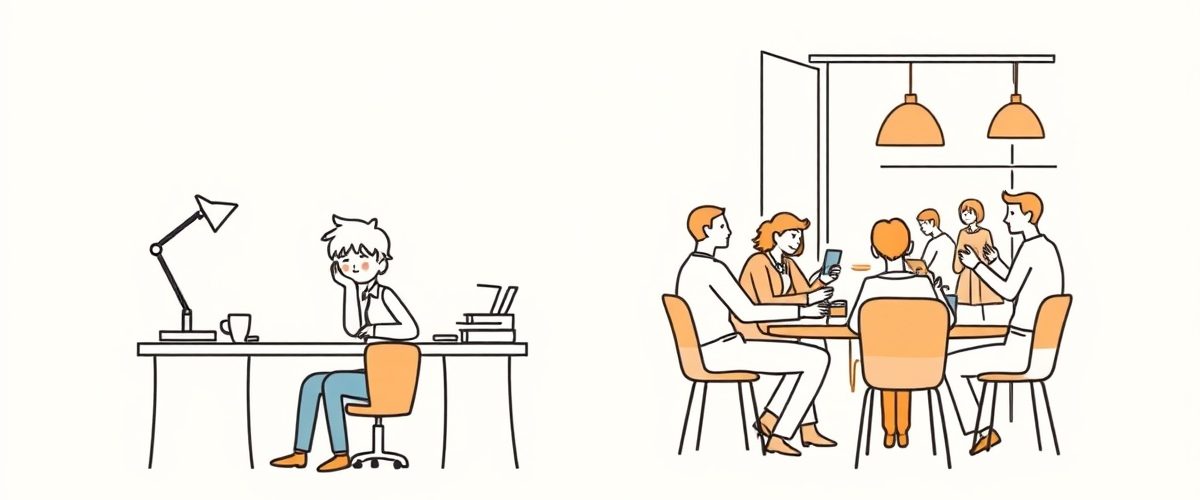
Social facilitation is a psychological phenomenon where your performance improves when others are present or potentially watching you. This effect occurs because an audience increases your arousal level, which sharpens your focus on the task at hand. The presence of others acts as a natural stimulant to your nervous system, making you more alert and engaged with what you’re doing.
The foundational research comes from Norman Triplett’s bicycle racing study in 1898. Triplett noticed that cyclists rode faster when competing against others than when racing alone against the clock. He replicated this finding in a laboratory setting, asking participants to wind fishing reels as quickly as possible. When others performed the same task nearby, participants worked faster than when working in isolation. This simple but elegant experiment demonstrated that social presence genuinely affects how hard we work.
The relationship between arousal and performance follows what psychologists call the Yerkes-Dodson law. This principle states that performance improves as arousal increases—but only up to a point. Moderate arousal sharpens your attention, speeds up your reaction time, and increases your motivation. Your brain releases adrenaline and cortisol when you sense an audience, heightening your mental state. However, excessive arousal can backfire, causing anxiety that tanks your performance on complex or unfamiliar tasks.
Key Takeaway: Why This Happens to You
When someone might be watching, your body enters a heightened state of alertness. This moderate arousal level boosts your productivity on well-practiced or straightforward tasks. Your brain prioritizes the task, suppresses distractions, and channels your energy into actually completing the work rather than procrastinating.
Your productivity surge isn’t laziness or a personal flaw—it’s your nervous system responding exactly as evolution designed it to. The presence of observers signals to your brain that your actions matter and carry social consequences, triggering this facilitation effect.
Why Am I More Productive When Others Are Around?
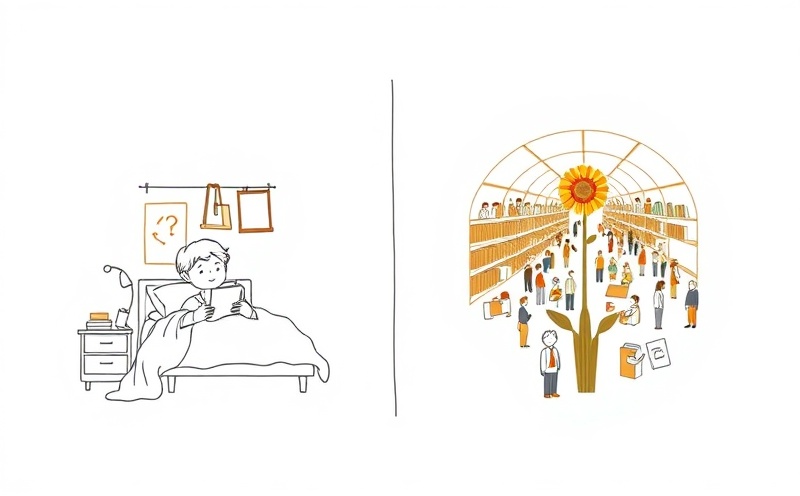
When someone else is nearby, your brain treats the environment as inherently important. You’re no longer just answering to yourself—you’re aware that your effort (or lack of it) might register with another person. This shift in accountability rewires how you approach the task. Instead of checking your phone every few minutes, you stay locked on the work itself because interrupting feels socially risky.
The physical act of being around others also strips away privacy in a productive way. At home alone, switching to social media feels consequence-free. In a library or café where someone might glance over, that same impulse feels exposed. Your brain weighs the social cost of visible distraction and decides the task is worth your full attention.
How Accountability Changes Your Behavior
Increased accountability when others are present works through three mechanisms: (1) you become aware that your actions are observable, triggering concern about your image; (2) your phone feels like a more obvious distraction in shared space, so you use it less; (3) mild social pressure activates competitive instincts—if someone nearby is working, you unconsciously match their intensity.
Competition with peers, even unspoken competition, activates your motivational systems. You don’t need direct comparison or ranking—just knowing that someone else is also working triggers a subtle drive to keep pace or outperform. This mirrors Triplett’s original cycling study: the mere presence of a peer working on the same task pushes you to work faster and harder, as if you’re racing without ever explicitly agreeing to race.
The reduction in distractions is the most straightforward mechanism. At home, your devices are guilt-free. Around others, distraction feels like a public failure. Your focus naturally consolidates because the cost of switching attention becomes socially visible.
Studying in Public vs at Home: The Productivity Battle
The environment you choose for studying shapes how much you actually accomplish. Home offers comfort and familiarity, but it also floods you with distractions that libraries and cafés naturally restrict. A public study space creates invisible social pressure—the presence of other focused people around you activates social facilitation, while your own home activates procrastination patterns you’ve built over years.
Studying at home puts you in an environment designed for relaxation. Your bed is three steps away. Your kitchen holds snacks. Your streaming services sit one click away on your laptop. None of these temptations feel risky because nobody is there to judge you for taking a break. Your brain knows from experience that home is where you can let your standards slip without social consequences. The lack of observers removes the arousal boost that keeps you on task. You’re working for an audience of one—yourself—and you’ve already agreed internally that distractions are acceptable.
Public spaces flip this dynamic entirely. A library or café full of other people studying creates an implicit social contract: everyone here is working. When you sit at a table surrounded by focused individuals, your brain registers that distraction would be visible. Opening TikTok feels like announcing to the room that you’re not serious about your work. This visibility doesn’t require anyone to actually watch you—the possibility alone triggers accountability. Your arousal level stays elevated because your environment signals that effort matters.
Environment Comparison
Home Study Space: Zero social observation, maximum comfort distractions, arousal levels drop, willpower depletes faster, ideal for already-habitual work only. Public Study Space: Moderate social observation, discomfort enforces focus, arousal stays elevated, willpower reserves last longer, ideal for difficult or unfamiliar material. Winner depends on task: Use home for routine review; use public spaces when you need to push through resistance on new or complex content.
The drawback of public studying is obvious: you sacrifice comfort for productivity. Café chairs aren’t ergonomic. Background noise can distract from certain types of thinking. You can’t take a real break without leaving your spot. Some people find the mild social anxiety of public spaces counterproductive—if your arousal spikes into anxiety rather than focus, you’re actually worse off. Complex problem-solving sometimes requires the mental safety of private space to work effectively.
Home studying fails not because the environment is bad, but because you’ve optimized it for every other activity except deep work. Your brain has learned that home means relaxation mode is available. Rewiring this requires either changing your physical setup—designating one specific corner as work-only territory—or accepting that you’ll always be more productive elsewhere. Many high-performing students solve this by using public spaces as their default study location, reserving home for casual review only.
The productivity battle between these settings isn’t really about the spaces themselves. It’s about whether your nervous system receives the arousal signal that your work matters. Public spaces deliver that signal passively through social presence. Home requires you to manufacture that signal internally through discipline. For most people, social facilitation is simply the easier pathway.
The Psychology of Being Watched: Audience Effects
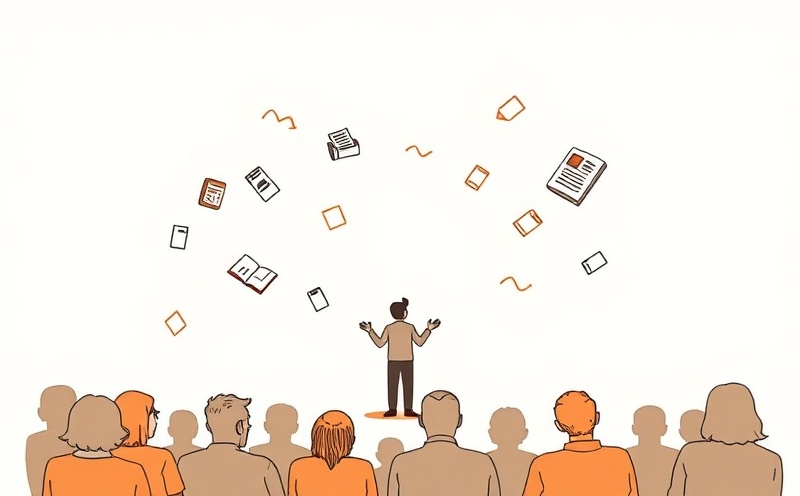
The Hawthorne effect emerged from a famous 1924 factory study where researchers tracked worker productivity at Western Electric’s Hawthorne Works in Chicago. Surprisingly, productivity increased regardless of whether lighting conditions improved or worsened—the real driver was that workers knew they were being studied. Simply being observed changed their behavior. This discovery shifted how scientists understood human performance: we don’t respond to objective conditions alone, but to the knowledge that someone cares about what we’re doing. When researchers stopped monitoring the workers, productivity dropped back to baseline. The takeaway is direct: awareness of observation, not the actual observation itself, alters your output.
This Hawthorne effect operates in your daily life through the same mechanism. You don’t need someone literally staring at your screen to feel more productive—the possibility that they *could* be watching triggers the effect. Your brain doesn’t distinguish between actual observation and potential observation. A friend studying across the table from you, a barista who might glance over, or even the abstract knowledge that you’re in a public space where observation is possible all activate the same psychological response. Your nervous system treats these situations as “someone might evaluate my effort,” and that belief alone reshapes your behavior.
The tension between performance anxiety and motivation often gets confused, but they’re distinct responses. Performance anxiety occurs when arousal becomes excessive—you feel stressed, your mind goes blank, and your performance tanks. This typically happens on difficult tasks where you’re not confident. Motivation, by contrast, is what happens when arousal hits that moderate sweet spot where the Yerkes-Dodson law predicts peak performance. An audience can trigger either response depending on your confidence level and task difficulty. When studying material you’ve already mastered, the same observer who would paralyze you on a difficult exam actually sharpens your focus. The key difference is predictability and control: if you feel unprepared, audience presence increases anxiety; if you feel ready, it increases motivation.
Mirror neurons explain why the behavior of people around you becomes contagious. These brain cells fire both when you perform an action and when you watch someone else perform it—creating neural synchronization between you and observers. When you sit in a library surrounded by focused students, your mirror neurons activate patterns they’re displaying, pulling your brain toward their same state of concentration. You unconsciously mimic their posture, their pace of work, even their intensity. This isn’t conscious imitation; it’s your brain copying the behavioral template others are providing. The presence of people working hard makes working hard feel like the natural, automatic response.
One research team measured this effect by having participants study while watching videos of either focused students or distracted students. Those who watched focused peers concentrated better on their own material, while those exposed to distracted peers performed worse. The mirror neuron effect is that powerful—your brain literally absorbs the work ethic of your environment. When you study alone, you set the behavioral template yourself. When you study around others, their effort becomes your default mode.
Three Ways Audience Presence Changes Your Brain
(1) Hawthorne Effect Activation: Your brain registers that your actions are potentially observable, triggering concern about how your effort will be evaluated. This shifts you from “nobody’s watching so slacking is safe” to “my performance might matter to someone.” (2) Arousal Optimization: Moderate audience presence elevates your nervous system to that Yerkes-Dodson sweet spot where attention sharpens, distractions fade, and motivation climbs—but only on tasks where you have baseline competence. (3) Mirror Neuron Synchronization: Your brain unconsciously mimics the focus and intensity of people around you, pulling you into their behavioral state without requiring conscious effort on your part.
Performance anxiety becomes dominant when you add uncertainty to the equation. Imagine studying material you barely understand while someone watches—now that observer feels threatening rather than motivating. Your brain interprets potential judgment as a social threat, and elevated arousal shifts from productive focus into stress. This is why public libraries work brilliantly for reviewing known material but can backfire when learning something entirely new. The solution isn’t to avoid observers on difficult tasks; it’s to build basic competence first in private, then use public space to refine and strengthen what you’ve already grasped. The observer effect works in your favor once you’ve eliminated the uncertainty that converts motivation into anxiety.
Social Facilitation Studying: Maximizing the Effect
Social facilitation works best when you match the right environment to your task type and confidence level. If you’re reviewing material you’ve already studied, any public space amplifies your focus—a café, library, or coworking space all trigger the Hawthorne effect equally well. The presence of strangers working on their own tasks is enough to activate accountability. If you’re learning something new or difficult, the calculus shifts. Start your initial learning in private where confusion feels safe, then move to public space once you’ve built foundational understanding. This two-stage approach lets you avoid the performance anxiety that kills learning while still capturing the productivity boost on material you’re consolidating.
Matching Environment to Task Difficulty
Review or routine practice: Study in public spaces (libraries, cafés, coworking spaces). High confidence in material + audience presence = peak performance. New or complex material: Begin learning alone, move to public space once you understand basics. Low confidence + audience presence = anxiety that blocks learning. Intermediate difficulty: Public spaces work if you’ve already done foundational study. The sweet spot is social facilitation applied after uncertainty is removed.
Body doubling has emerged as one of the most practical applications of social facilitation for remote workers and students. The concept is simple: two people work independently on separate tasks in the same physical or virtual space, without directly collaborating. You’re not tutoring each other or discussing your work. You’re simply present together, each doing your own thing. This creates accountability without interaction. A friend sitting across from you at your dining table while you both work on different projects triggers the same mechanisms as a library—observable effort, implicit social pressure, behavioral synchronization through mirror neurons. The other person doesn’t need to understand your work or care about your results. Their mere presence, combined with your shared commitment to the work session, generates the arousal boost that drives focus.
Virtual body doubling extends this effect to remote settings. Platforms like Focusmate pair you with a stranger for 50-minute sessions where you briefly state your goals, work silently on camera for 45 minutes, then report back. Studies on these sessions show productivity gains comparable to in-person library studying. The camera awareness replicates the Hawthorne effect—knowing you’re on camera triggers concern about how your effort appears. The brief accountability check-in at the start and end creates commitment: you stated your goal to another human, so abandoning it feels like breaking a promise. The cost of switching to social media or a distraction isn’t just internal guilt; it’s the awkwardness of admitting to your partner that you wasted the time you promised to use productively.
Coworking spaces represent the premium version of body doubling. You’re paying for a desk surrounded by other professionals, all working on separate tasks. The financial commitment adds another layer of accountability—you’re not just socially obligated to focus, you’re financially incentivized. The environment is specifically designed to remove home distractions and maximize focus. Background noise is typically kept at productive levels (conversations, not silence). The unwritten rule that everyone here is working creates a behavioral baseline. The downside is cost, but for people whose home productivity is genuinely broken, a coworking membership often pays for itself through the work you actually complete.
Body Doubling Methods Ranked by Effectiveness and Accessibility
In-person body doubling (friend at your home or neutral location): Zero cost, highly effective if both parties commit, works instantly, limited by availability of reliable partner. Library or café study: Zero cost, effective if you already have baseline confidence in material, requires commute time. Virtual body doubling platforms (Focusmate, Flocus): Low cost ($5-15 per session), highly structured accountability, works for remote workers, paired with strangers so less personal friction. Coworking space membership: $100-300 monthly, most reliable environment, eliminates home distractions completely, best ROI if you work from home regularly. Choose based on task difficulty: Use free methods for routine work; invest in paid options when high-stakes projects demand maximum focus.
Accountability partners work through a different mechanism than body doubling. You’re not just present together; you’re explicitly committed to reporting results. An accountability partner checks in with you on specific goals—”Did you study for two hours?” or “Did you finish that section?”—and you do the same for them. This creates external consequences for following through. You can’t just tell yourself you’ll work and then scroll instead; you’ve made a commitment to another person who will know if you failed. Text-based accountability partnerships work at distance and cost nothing. The key is specificity: vague goals (“study more”) don’t trigger accountability. Concrete goals (“complete Chapter 3 and answer the review questions”) create actual consequences.
The most effective accountability partnerships pair social obligation with social facilitation. Schedule a 90-minute coworking session where you and your partner work on your respective tasks via video call, then spend 10 minutes reporting what you accomplished. You get the Hawthorne effect from being on camera, the behavioral synchronization from watching someone else work, and the social commitment from having stated specific goals to another human. The combination is more powerful than any single mechanism alone. Many students report that switching from solo studying to accountability partnership sessions increases their productivity by 30-50 percent on difficult material.
Timing and consistency matter more than you might expect. A single body doubling session gives you a one-time productivity boost. Weekly scheduled sessions create a pattern your brain learns to anticipate—you start feeling more focused on the day you know you have a session coming, because your brain has learned that focused work happens during that time. The ritual becomes as important as the mechanism. This is why people who join coworking spaces or recurring study groups often report that their productivity creeps upward over weeks, even on days when they’re not physically present. Your brain has internalized the expectation that this is what happens during this time.
Virtual presence through asynchronous accountability also works, though less powerfully. Posting your daily study goals in a Discord server or group chat and updating it later creates a paper trail. Your brain knows others can see whether you followed through. This is weaker than real-time observation because there’s a time delay—you can procrastinate now and face judgment later—but it’s stronger than keeping goals entirely private. Many students find that one or two asynchronous accountability channels combined with periodic in-person or synchronous sessions hits the right balance between structure and flexibility.
The risk of social facilitation is that it can create dependency. You become productive only when watched, unable to self-motivate alone. Avoid this by gradually building your own internal accountability signals. Use public studying and body doubling to complete important work, but intentionally practice solo focus on low-stakes material. The goal isn’t to need external observers forever; it’s to use them strategically to build habits you can eventually run on internal motivation. Some people need external structure permanently—and that’s fine—but most people find that consistent public studying eventually trains their brain to expect focus during work time, even when alone.
Overcoming the Need for External Motivation
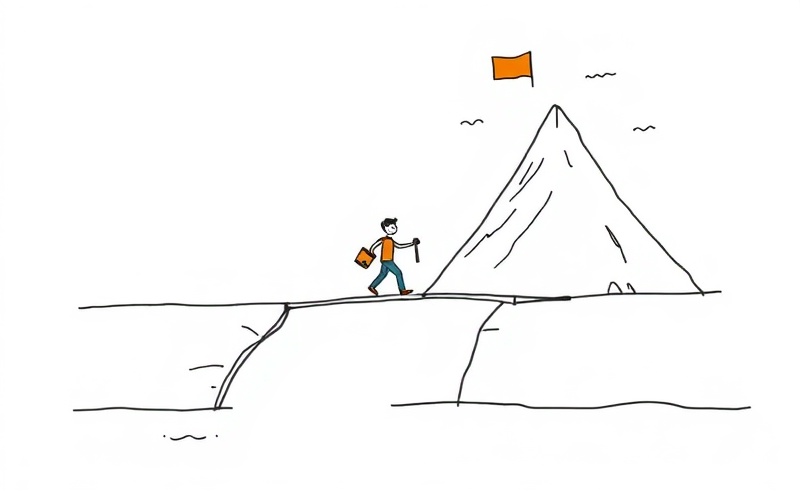
The productivity paradox of needing observers is that it can trap you in external motivation. You perform when watched, but struggle with autonomy. Breaking this pattern requires intentionally building internal accountability systems that replicate what public spaces and observers do automatically. The goal isn’t to eliminate your reliance on external cues overnight—that’s unrealistic. Instead, you gradually shift from needing real observers to creating artificial ones, then eventually internalizing the accountability itself.
Self-monitoring is the first bridge between external and internal motivation. The act of tracking your own behavior changes how you behave, even without observers present. When you document your study sessions—logging time spent, material covered, or quality of focus—your brain registers that someone (you) is paying attention to your effort. This isn’t as powerful as a real observer, but it activates a weaker version of the Hawthorne effect. You’re creating a paper trail of your own performance, and knowing that trail exists shifts your choices. The simple act of opening a spreadsheet and marking “90 minutes of focused study” makes wasting that time feel like lying to yourself.
The mechanics of self-monitoring work through multiple channels. First, the tracking itself requires a pause—before you switch to social media, you have to acknowledge that you’re breaking your commitment, because you’ll have to either skip logging it or record the distraction. That friction creates decision awareness. Second, looking back at your logs shows patterns. You see which times of day you focus best, which locations work, which tasks drain your motivation fastest. This data lets you engineer your environment rather than relying on willpower. Third, accumulating weeks of logged sessions creates a streak effect—the visible record of consecutive productive days makes breaking that streak psychologically costly.
Three Self-Monitoring Methods That Build Internal Accountability: (1) Time-tracking apps (Toggl, RescueTime, or even a simple spreadsheet): Log start and end times for each study session, plus the material covered. Review weekly to identify patterns in your productivity. (2) Study journal: Write 2-3 sentences after each session about what you accomplished, difficulty level, and focus quality. This forces reflection and creates a personal record you’ll feel reluctant to abandon. (3) Visual progress tracker: Use a wall calendar and mark each day you complete your target study time with a checkmark or colored dot. The growing chain of marks becomes a visual commitment you won’t want to break.
Gamification translates the reward mechanisms that observers trigger into solo systems. When someone watches you succeed, you get social recognition and status. When nobody watches, that reward disappears. Artificial gamification recreates it. Assigning yourself points for focused study sessions, earning badges for streaks, or competing against your own previous performance reactivates the motivation circuits that public spaces trigger. Apps like Habitica literally turn your study goals into a role-playing game where you level up your character by completing real-world tasks. This sounds frivolous, but your brain doesn’t distinguish between real social rewards and gamified ones—the dopamine hit is neurologically identical.
The key to effective gamification is making the rewards immediate and visible. Delayed rewards (finishing your degree) don’t trigger the same motivation boost as immediate ones (getting a point right now). Your brain is wired to care about near-term consequences, not distant ones. So a system that gives you 10 points immediately after a 50-minute study session works better than one that promises a future reward for completing a whole semester. Track your points daily, watch them accumulate visually, and occasionally cash them in for small rewards—a favorite snack, an episode of a show you like, 30 minutes of guilt-free scrolling.
Environmental design removes the need for willpower by making the right choice the easiest choice. This is how public spaces work—they design your situation so that focusing is easier than distracting. You can replicate this alone. If you’re studying at home, physically separate your study space from comfort zones. A desk in a corner facing a blank wall is harder to distract from than a desk pointed at your bed. Remove your phone from arm’s reach. Close all browser tabs except the ones you need. Set your laptop to block social media during study hours. These aren’t about willpower; they’re about making distraction require conscious effort instead of thoughtless habit.
The more friction you add to distractions, the more your behavior approximates what happens in public spaces. In a library, opening TikTok is inconvenient—everyone around you would see it. Replicate this by making your phone genuinely inconvenient. Put it in another room. Use an app blocker that requires you to wait 10 minutes before accessing social media, during which your commitment to study might reassert itself. Some students use website blockers that require them to email their accountability partner to disable them. These tools aren’t constraints; they’re decision-delay mechanisms that interrupt the automatic reach for distraction.
Four Environmental Design Changes That Reduce Dependency on External Observation: (1) Dedicated study corner: Use only one specific location for focused work, never for relaxation or entertainment. Your brain learns to enter work mode when you sit there. (2) Phone removal: Keep your phone in a different room during study sessions, not just face-down on your desk. Distance removes the temptation of an accidental glance. (3) Browser discipline: Close all tabs except those required for your current task. Bookmark everything else so it’s available but not immediately accessible. (4) Pre-session setup: Spend 5 minutes before studying to arrange your space optimally—water bottle, notes, silence or music playing, all distractions removed. This ritual signals to your brain that work time is starting.
Intrinsic motivation emerges from three core sources: autonomy (feeling in control of your choices), competence (feeling capable and making progress), and relatedness (feeling connected to something larger than yourself). Public spaces and observers activate competence and relatedness automatically—you feel capable when you see others succeeding, and you feel part of something when surrounded by focused people. Building intrinsic motivation means creating these feelings solo. Autonomy is the easiest: choose what you study and when, rather than following a rigid schedule imposed on you. Competence grows through tracking visible progress—see yourself master material incrementally rather than waiting for the final grade. Relatedness can come from studying for a purpose beyond yourself—learning to help others, passing to unlock a career path, mastering a skill for a cause you believe in.
The shift from “I study because someone might be watching” to “I study because I want to” happens through repeated experiences where you complete work without observers. Start small. Pick a low-stakes assignment—something due next week, something that won’t destroy your grade if it’s mediocre. Use your self-monitoring system and environmental design to complete it alone, without body doubling or accountability partners. Notice that you did it. Acknowledge to yourself that you followed through without anyone watching. This experience rewires your brain’s understanding of what you’re capable of. You’ve created evidence that internal motivation is possible for you, not just theoretical.
Most people don’t fully eliminate external motivation; they reduce their dependency on it. A high-performer might study alone 70 percent of the time (relying on self-monitoring and environmental design) and use body doubling for 30 percent of work (the hardest, most important projects). This is fine. External motivation isn’t a weakness to erase—it’s a tool to use strategically. The goal is optionality. You want to be productive with observers present, yes, but also capable of focus when alone. The student who can only work when watched is fragile—one day without an accountability partner and the system collapses. The student who can work with or without observation is resilient.
Consistency builds automaticity faster than willpower. If you study in the same location at the same time every day, your brain begins entering focus mode automatically when that time arrives, independent of whether anyone’s watching. This is the same principle that makes commuting to a coworking space work—the ritual and location become triggers. Your brain learns the sequence: you sit at the desk, you open your materials, you work. No conscious decision required. Two weeks of inconsistent studying leaves you at zero; two weeks of consistent 90-minute sessions trains your brain to expect focus during that window. The external motivation gradually becomes unnecessary because the behavior has become automatic.
Track not just whether you completed your work, but how you felt during it. Notice sessions where you stayed focused without external motivation. What was different? Was it the task type, the time of day, your energy level, the specific location, whether you’d slept well? Your goal is to identify which internal conditions replicate what observers do automatically. Maybe you focus best in the morning after coffee. Maybe certain types of work (writing vs. math) hold your attention differently. Maybe studying with lo-fi background music keeps you engaged better than silence. Once you identify your personal conditions for autonomy-driven focus, you’re building a portable system that doesn’t require external observers to function.
Expect regression. Days will come when you want to abandon self-monitoring and just procrastinate. Your self-designed accountability system will feel insufficient compared to the real Hawthorne effect of sitting in a library. This is normal—external motivation feels more powerful because it is, neurologically. Acknowledge the difficulty without giving in. On hard days, use external motivation. Schedule a body doubling session. Go to a library. Text your accountability partner that you need support. The goal isn’t perfection in autonomous motivation; it’s progress and flexibility. Over months, the ratio shifts. You’ll use external motivation strategically rather than dependently, and your internal systems will feel increasingly sufficient.
Frequently Asked Questions
Is it normal to only be productive when others might be watching?
Yes, this is completely normal and affects approximately 70% of people according to productivity research. Social facilitation is a well-documented psychological phenomenon that has evolved as a survival mechanism to help humans perform better in group settings.
How can I be productive when working alone at home?
Create artificial accountability by using productivity apps with social features, scheduling virtual coworking sessions, setting visible timers, or working on video calls with friends. These simulate the presence of others and trigger similar productivity benefits.
Does studying in coffee shops actually improve focus?
Research shows that moderate ambient noise (around 70 decibels) in coffee shops can enhance creative thinking and focus for many people. The social environment also provides accountability pressure that reduces procrastination behaviors.
Why do I procrastinate more when I'm alone?
Without external observation, your brain's reward system prioritizes immediate gratification over long-term goals. The absence of social accountability removes the psychological pressure that normally motivates task completion and reduces procrastination behaviors.